

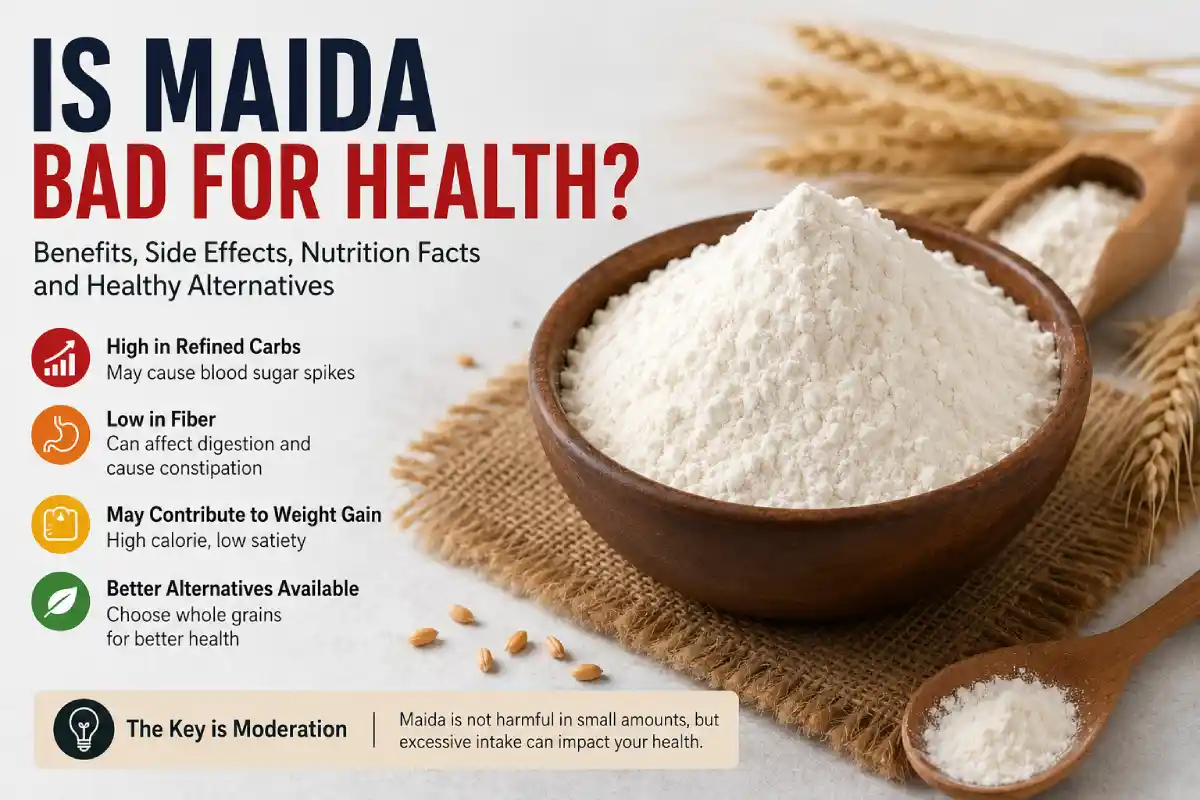
Last Updated: October 13, 2026
In most kitchens, bakeries, restaurants and the food manufacturing sector, maida is among the ingredients used more frequently. Whether it is for soft bread, cakes, biscuits, pizza bases, noodles, pastries and many other cuisines, maida is a common ingredient found in most foods that we enjoy daily. But over the years, several health concerns have been raised regarding maida, with many nutritionists and health gurus suggesting people cut back on their intake.
However, others feel that moderate intake of such foods might be acceptable for healthy people.
Let’s try to understand the truth about maida.
Is maida bad for health?
Well, the answer to this question is not a simple yes or no. Maida is not toxic in itself.
But the overuse of processed white flour food can lead to a plethora of problems over the years.
Let’s understand how maida is processed and what happens in your body when you consume these foods. In this complete guide, we will take a closer look at what maida is, the nutritive value of maida, the benefits and disadvantages, its effects on health, and the healthy alternatives to maida.
Table of Contents
What Is Maida?
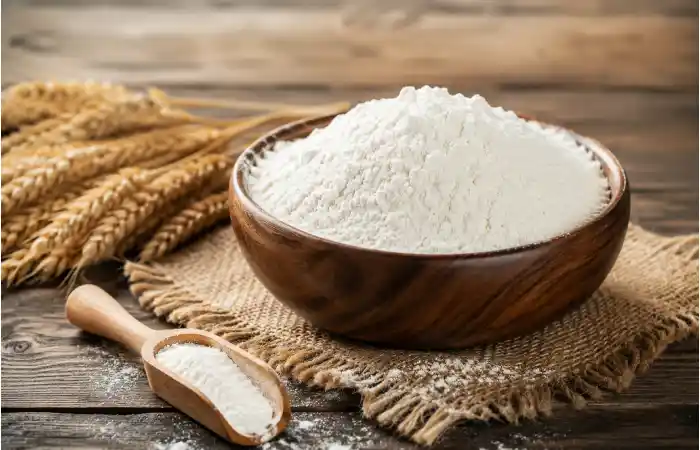
Maida is an extremely processed wheat flour prepared by further refinement of wheat by removing its outer bran and the inner germ layer from the wheat grain. What remains of the wheat grain is the floury part known as the endosperm.
This process yields an ultra-fine, white, silky texture flour and has a wide array of applications in both cooking and baking.
How Maida Is Made
| Step | Process |
| 1 | Wheat grains are cleaned |
| 2 | Bran layer is removed |
| 3 | Wheat germ is removed |
| 4 | Endosperm is finely ground |
| 5 | Flour is bleached or refined |
| 6 | Final product becomes maida |
As a good source of fibre, vitamins and minerals is found largely in bran and germ of a cereal, this leads to loss of nutrients while making maida.
Nutritional Value of Maida
Maida contains carbohydrates along with a negligible amount of fiber.
Nutrition Per 100 Grams of Maida
| Nutrient | Amount |
| Calories | 364 kcal |
| Carbohydrates | 76 g |
| Protein | 10 g |
| Fat | 1 g |
| Fiber | 2-3 g |
| Iron | Small amount |
| Calcium | Low |
| Potassium | Low |
| Vitamin B | Reduced after processing |
Maida has much less nutritional value and fiber content than whole wheat flour.
Maida vs Whole Wheat Flour
The easiest way to understand maida and its effects is to take a closer look at whole wheat flour.
| Feature | Maida | Whole Wheat Flour |
| Processing | Highly refined | Minimally processed |
| Fiber | Very low | High |
| Vitamins | Reduced | Rich |
| Minerals | Reduced | Higher |
| Satiety | Lower | Higher |
| Blood Sugar Impact | High | Moderate |
| Digestion | Faster | Slower |
| Nutritional Density | Lower | Higher |
This comparison clearly shows why health professionals often recommend whole wheat flour over maida.
Why Is Maida Considered Unhealthy?
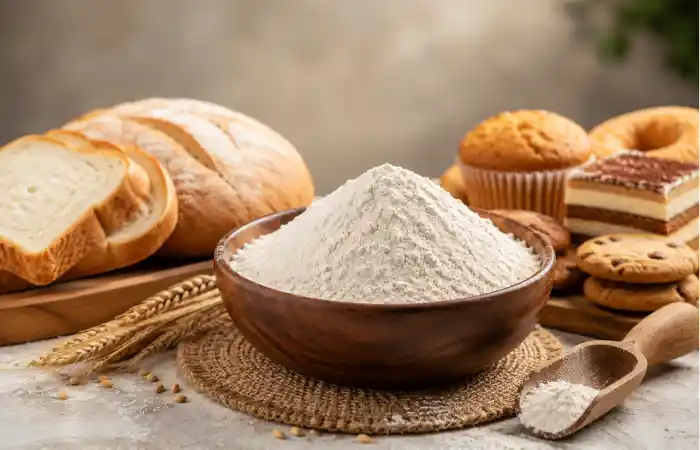
Several factors contribute to the negative reputation of maida
1. Low Fiber Content
In order to achieve smooth and better digestion, fibre is the one thing you need most. But in the process of making maida, all the dietary fiber is discarded. The outer bran layer has most of it removed.
Low-fiber foods may:
- Cause hunger sooner
- Lead to overeating
- Slow digestive health improvements
- Increase constipation risk
Fiber also helps regulate blood sugar and cholesterol levels.
2. High Glycemic Index
A high Gi Maida. Its GI is higher which cause your blood level increase up rapidly.
Blood Sugar Impact Comparison
| Food | Glycemic Impact |
| White Bread (Maida) | High |
| Pizza Base (Maida) | High |
| Whole Wheat Roti | Moderate |
| Oats | Low |
| Brown Rice | Moderate |
Frequent blood sugar spikes may increase the risk of:
- Insulin resistance
- Weight gain
- Type 2 diabetes
- Energy crashes
3. Reduced Nutritional Value
During processing, many nutrients are lost.
Nutrients Lost During Refining
| Nutrient | Importance |
| Fiber | Digestion |
| Vitamin B1 | Energy metabolism |
| Vitamin B6 | Brain function |
| Magnesium | Muscle health |
| Iron | Oxygen transport |
| Zinc | Immunity |
As a result, maida provides calories but fewer essential nutrients.
4. May Contribute to Weight Gain
Foods made from maida are often:
- High in calories
- Low in fiber
- Easy to overeat
Examples include:
- Cakes
- Pastries
- Cookies
- Burgers
- Pizza
White bread Since these foods break down quickly, hunger returns quicker and results in increased calories eaten.
5. Digestive Issues
Maybe there are some others to cause problems with your tummy, if eating lots of fast food at times.
Potential concerns include:
- Bloating
- Constipation
- Sluggish digestion
- Feeling heavy after meals
The lack of fiber is usually the main reason behind these issues.
Can Eating Maida Cause Diabetes?
Maida alone does not directly cause diabetes.
However, frequent consumption of high-GI foods can increase insulin demand over time.
Risk Factors
| Factor | Impact |
| Frequent sugary pastries | High |
| White bread daily | Moderate |
| Sedentary lifestyle | High |
| Excess calorie intake | High |
| Family history | High |
Addictions may also have a role in the risk of diabetes in the combination of an unhealthy lifestyle and excessive use of maida.
Does Maida Cause Belly Fat?
Maida itself does not specifically target belly fat.
However, foods made from maida are often:
- High in calories
- Rich in sugar
- Rich in unhealthy fats
These factors can create a calorie surplus, leading to fat accumulation around the abdomen.
Foods Commonly Made with Maida
| Food | Weight Gain Potential |
| Cake | High |
| Doughnuts | High |
| White Bread | Moderate |
| Pizza | High |
| Pastries | Very High |
| Noodles | Moderate |
Moderation remains the key.
Is Maida Bad for the Digestive System?
Eating low-fiber foods regularly could impact your digestive health negatively.
Possible Effects
- Reduced bowel movement frequency
- Increased constipation
- Gut microbiome imbalance
- Reduced satiety
Replacing some of the refined flour foods with foods high in fiber will do wonders for your digestion.
Are There Any Benefits of Maida?
While maida is often criticized, it does have some practical benefits.
1. Easy to Digest
Because it lacks fiber, maida digests faster.
This may be useful in:
- Certain medical diets
- Temporary digestive recovery
- Low-fiber dietary requirements
2. Better Texture in Baking
Maida provides:
- Soft cakes
- Fluffy bread
- Smooth pastries
- Crispy snacks
Its fine texture makes it a preferred ingredient for bakers.
3. Longer Shelf Life
Compared with whole wheat, white flour may last longer than the reason of removing oil from germ.
How Much Maida Is Safe to Eat?
There is no universal limit.
Almost all nutritionists suggest consuming maida foods as an occasional item instead of as an everyday food.
Suggested Consumption Guide
| Frequency | Recommendation |
| Daily large portions | Not ideal |
| Several times weekly | Limit intake |
| Occasionally | Generally acceptable |
| Rare treats | Best approach |
A balanced diet matters more than a single ingredient.
Healthier Alternatives to Maida
If you’re looking to reduce refined flour intake, many nutritious options are available.
Comparison of Flour Alternatives
| Flour Type | Fiber | Protein | Health Rating |
| Maida | Low | Moderate | Fair |
| Whole Wheat | High | Good | Excellent |
| Oat Flour | High | Good | Excellent |
| Ragi Flour | High | Moderate | Excellent |
| Bajra Flour | High | Good | Excellent |
| Jowar Flour | High | Good | Excellent |
| Almond Flour | Moderate | High | Excellent |
These options not only provide the best nutritional punch but also are typically better for managing sugar levels.
Tips to Reduce Maida Consumption
Reducing maida doesn’t mean giving up your favorite foods completely.
- Practical Strategies
- Select whole wheat bread.
- Replace white pasta with whole grain pasta.
- Incorporate millet rotis in your diet.
- Eat home-made snacks more often.
- Minimize intake of bakery products.
- Eat fruits and vegetables more often.
- Read the ingredient labels carefully.
Small changes can make a significant difference over time.
Signs You May Be Eating Too Much Maida
If refined flour makes up a large part of your diet, you may notice:
| Sign | Possible Reason |
| Frequent hunger | Low fiber |
| Weight gain | Excess calories |
| Energy crashes | Blood sugar fluctuations |
| Constipation | Fiber deficiency |
| Cravings | Rapid digestion |
These symptoms can also have other causes, but diet often plays a major role.
Myths About Maida
Myth 1: Maida Is Poison
False.
Maida is not poisonous. Problems generally arise from excessive intake and poor dietary balance.
Myth 2: One Slice of White Bread Is Dangerous
False.
Occasional consumption is unlikely to harm healthy individuals.
Myth 3: Everyone Must Completely Avoid Maida
False.
Moderation is more realistic and sustainable than complete elimination for most people.
Myth 4: Maida Alone Causes Obesity
False.
Weight gain usually results from consuming more calories than the body burns.
Who Should Limit Maida Intake?
Some individuals may benefit from reducing refined flour consumption.
Higher-Risk Groups
- People with diabetes
- Individuals with obesity
- Those with insulin resistance
- People with digestive issues
- Individuals following weight-loss plans
For these groups, choosing whole grains more often may provide better health outcomes.
Final Verdict: Is Maida Bad for Health?
So the reality is maida actually isn’t as harmful food as long as we eat in limits on the basis of balanced diet. The disadvantage with maida is the extreme level of processing; maida actually has minimal amounts of vitamins, fiber, and minerals; consuming it in excessive quantities can contribute to weight gain, diabetes, digestion issues, and can compromise your nutritional intake.
It is actually the ready-to-consume final products, such as pizzas, biscuits, cakes, pastries, and white bread in the market, that cause more damaging consumption due to the use of large quantities of maida.