

Summary
Helvetic Clinics is a Swiss founded, Budapest based dental group and has become one of Europe‘s most well known names for dental tourism, bringing thousands of UK patients to Budapest each year. Cost-wise, a single implant is around £830 (compared to £1,800-£5,500 in the UK), and an All-on-4 full arch is around £4,500 per jaw (compared to £12,000-£25,000+ privately in the UK). It is ISO 9001 certified, has been GCR‘s highest ranked Hungarian clinic since 2014, and has received 2,000+ Google reviews averaging 4.9 stars. The savings are real, but so are the risks of issues around aftercare and dealing with complications, or having a rushed, 7-10 day treatment plan. This guide provides UK patients an honest, comprehensive overview before booking.
There is a reason why so many hundreds of thousands of us are now jetting off to Budapest, Istanbul and further for our dentistry. It is not a craze for the foolhardy or the naive. It is a consequence of a form of health care which has, for a large element of the adult population, simply ceased to be there.
In 2026, 97 per cent of people needing a new NHS dentist in England were unable to find one. Nine in ten dental practices serving the whole of England aren‘t taking on any new adult NHS patients. In recent years over 2,000 full time equivalent dentists have left NHS practice and dentists repaid almost £1 billion in public funds in the three years to 2025, because it was financially impossible to deliver care at the prices available.
Latest data from ONS published in September 2025 indicates that around 523,000 UK residents every year go overseas for dental treatment. That‘s a rise of 50.29% since the 431,000 in 2023/2024.
For everyone who has been stranded on a waiting list for six months, or quoted the same implant at £3,000, or turned away by the third NHS practice in a row helveticaClinics for dental treatment abroad was naturally something you searched for.
Not sure what Helvetic Clinics really is, what they are offering, how much you actually save, what the risks actually are and what really needs to be asked before you even consider booking? Well you have come to the right place!
Table of Contents
Why UK Patients Are Choosing Dental Treatment Abroad in 2026
The numbers make the decision understandable. In the UK right now:
Costs of a complete set of dental implants at a private UK clinic now usually falls in the range of about £25,000 to £35,000 (net annual average take-home salary in the UK was around £29,000–£31,000 according to the Office for Budget Responsibility figures compiled in 2025
A Dental implant is purely a private treatment in the UK costing between £ 1,800 and £ 5,500 per tooth [43]. The nhs waiting lists increased from a post pandemic figure of about 6.1 million to a figure of about 7.4million in 2024 and are expected to increase further up to 2026 [44].
Implants are funded by the NHS only in certain clinical circumstances. One is much more likely to encounter NHS-funded implants in a university or teaching hospital setting. Elsewhere, even these indications are patchy, and the vast majority of patients requiring an implant for simple tooth loss will have to pay privately.
Hungary was the number one destination for dental tourism for UK patients. Budapest only 2.5 hours in the plane from London, Hungary had joined the EU in 2004 and its dental schools are world renowned. Helvetic Clinics undoubtedly used this knowledge to their advantage better than anyone else in the country.
What Is Helvetic Clinics? The Full Picture
Helvetic Clinics is a dental clinic group and dental support organisation based in Switzerland. The company‘s main business focus is on the European medical tourism sector. It was created by Jean Francois Empain and Pierre Chayer. The company is based in Switzerland but the most significant and well-known of their clinical operations is in Budapest, Hungary. The group focuses on offering complex dentistry to an international client base predominately from Western European nations including France, the UK and Switzerland.
An important innovation for Helvetic Clinics is the concept of ‘Clinic-Hotel’ in Budapest, where the clinic is located in the same building as 12 Revay Hotel, a recently built hotel in the city. This has been noted as one of the main reasons the clinics achieve large customer satisfaction ratings and profitable market position.
The Swiss branding is very purposeful and key to understand. Helvetic Clinic‘s marketing drastically revolve around being Swiss, when they are based in Budapest, Hungary. They use true differentiation model of specialising: Implantologists are only specialist for implants. Odontologists for lost teeth. Periodontist for gums.
This specialist separation is important – it means you are being treated by somebody who only does implants, and not a general dentist who also does checkups and fills.
Helvetic Clinics Accreditation and Quality Credentials
It makes sense to know the quality frame of context before considering prices.
Helvetic was voted top World dental clinic by the GCR (Global Clinic Rating) out of 140,000+ dental clinics worldwide from 2015-2017. It has been voted best dental clinic in Hungary every year since 2014. It is ISO 9001 certified and has more than 2,000 reviews on google with a 4.9 rating.
ISO 9001 relates to quality management systems it assesses the clinic‘s systems, written material, flow of patients and quality control measures to ensure that they conform to an internationally recognised system. It is not a dental-specific qualification, but does provide evidence of high standards.
The clinic is certified ISO9001 and is extremely regulated according to comes from of a strict Swiss regulation. The dentist has been trained around the world and can offer any service that includes advanced implantation surgery.
Is much more trustworthy than marketing claims when it comes to patient evaluation of foreign clinics… GCR recognition and ISO certification, coupled with thousands of independently verified reviews across Google and Trustpilot, offer a much more trustworthy indicator of quality than most of GCR’s rivals when it comes to dental tourism.
Helvetic Clinics Prices: Honest UK Comparison (2026)
This is where the decision becomes concrete for most UK patients.
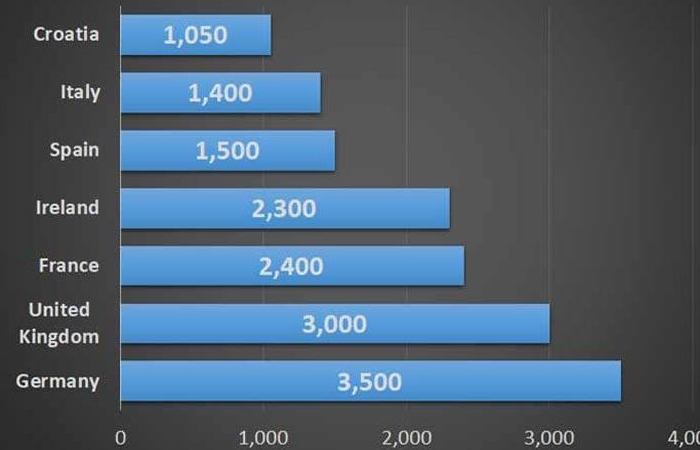
Helvetic Clinics structures its pricing to undercut UK and Irish dental costs significantly. A single dental implant including the abutment and crown starts at £830, while a 3-unit bridge supported by two implants begins at £1,800. For full-arch restoration, the All-on-4 procedure for one jaw costs from £4,500. Diagnostic imaging such as CT scans and X-rays typically comes included within treatment packages, though bone grafting procedures incur additional charges.
Here is how those figures compare to UK private rates:
| Procedure | Helvetic Clinics (Budapest) | UK Private Clinic | Approximate Saving |
|---|---|---|---|
| Single Implant (incl. crown + abutment) | From £830 | £1,800–£5,500 | £970–£4,670 |
| 3-Unit Bridge (2 implants) | From £1,800 | £4,000–£9,000+ | £2,200–£7,200 |
| All-on-4 (one jaw) | From £4,500 | £12,000–£20,000+ | £7,500–£15,500 |
| Full Arch Restoration (both jaws) | From £9,000 | £25,000–£35,000+ | £16,000–£26,000 |
| Dental Crown (per tooth) | From £250–£400 | £600–£1,500 | £350–£1,100 |
| Porcelain Veneer (per tooth) | From £350 | £600–£1,200 | £250–£850 |
Patients travelling from the UK and Ireland regularly report total savings of 50% to 70% even after accounting for flights and accommodation, with the gap widening for complex procedures requiring multiple implants.
At Budapest’s price point, a patient needing four implants saves enough to fund multiple return flights, a week’s accommodation, and still come out £8,000–£15,000 ahead. The financial mathematics for complex cases are genuinely compelling.
One Important Pricing Caveat
Public price pages are useful but only when read diligently. The numbers by themselves can be misinforming as not all clinics show the same currency not all show the same implant systems not all show the same inclusion signals. A cheaper quote with poorer documentation is not normally better value, its normally higher uncertainty. No matter how expensive always ask for an itemised quote that clearly states What implant system and manufacturer is being supplied? Is CT imaging included? Is bone grafting included? Is bone grafting separate? provisional vs final restoration? What post operative follow up is included in the package price?
Which Treatments Does Helvetic Clinics Offer?
Helvetic Clinics specialize in advanced, comprehensive dentistry such as:implants (implant placement to replace missing teeth), full mouth dental rehabilitations (difficult cases requiring combinations of crowns, bridges, veneers and implants to reconstruct a full smile); and anything cosmetic such as lumineers, crowns and smile makeovers.
Cosmetic enhancement can be achieved by the provision of veneers, crowns, teeth whitening and a Hollywood Smile. Prosthetics and restorative dentistry can be provided by way of bridges, dentures and bite correction to meet the individualised treatment plan. General dentistry can be provided by way of fillings, root canal treatment and preventative dentistry.
Table 7 shows for a UK patient where the greatest value exists, where the cost differential between Budapest and home is greatest. For this market they are full-arch implant restoration (All-on-4, All-on6), multiple single implants and full-mouth rehabilitation with a combination of crown and veneer work using implants. These are the treatments where dental tourism pays the biggest dividend and where the benefit of Helvetic‘s specialisation model is most obvious.
What UK Patient Reviews Actually Say
Trustpilot reviews mention ‘the clinic is modern, very professional and very clean’, ’ All services, treatments and procedures went according to plan and were carried out professionally and skillfully’, ‘Very clean and well presented, staff are English speaking which made it easier – top class service and I will be coming back for more treatment’ and ‘Just returned to UK following my second visit to the clinic. Wow! The service here is incredible’.
The common factors in all confirmed feedback from UK patients are friendly staff, speaking English; modern, well equipped clinic; analgesia at same or better level to the UK; and the convenience of the integrated hotel.
Short waiting times, English-speaking staff and painless procedures are often reasons given by patients for their preference of this Hungarian hospital over facilities closer to home.
Some reviewers have not been happy one experienced, “They tried to sell me things I didn‘t want. All I wanted was a little bit of a smile makeover. Which I did, but they just didn‘t stop trying to find other things wrong with my teeth and pushed me into having all sorts of things done that I didn‘t need.” Upselling can happen at any of the dental tourism clinics so be aware of it and keep clear on what you want to get.
The Risks and Honest Truths of Dental Treatment Overseas: What No-one Will Tell You Upfront
This is the part that the majority of dental tourism articles miss out because it is not profitable. Read it more intently this is the part that is going to be most useful.
The Aftercare Problem
If we fail or become infected? Lets say you have your implant fitted in another country as travelling back to Budapest is prohibitively expensive. The problems will arise if we need to do remedial work, as UK clinics are less likely to want to take the responsibility of rectifying work carried out by another dentist. Remedial work to rectify failed implants is usually far more complicated and much more costly than a primary treatment.
This is likely to be the biggest risk associated with all forms of dental tourism, and is just as relevant to Helvetic Clinics as it is to any overseas dentist. Implants can fail. Infection can occur. Healing can go wrong. If this does happen after you get back to the UK your hand is substantially weakened..
Whether your UK dentist will treat complications of treatment elsewhere or not they will be visiting your private patients rate, as NHS dentists cannot charge for treatment they did not begin. This can often cost more to treat a failed dental implant in the UK than it did to place it.
The practical mitigation. When booking, specifically ask Helvetic Clinics: What is your complication protocol for patients who are new back in the UK? What documentation is provided to my UK dentist? Do you cover any costs for returning travel for complications within your guarantee period? Put it all in writing.
The Treatment Timeline Risk
These aren‘t ‘one hit’ procedures. They are a partnership. Usually there is a surgery, healing period 3-6 months for osseointegration then the restorative phase to fit the definitive teeth. Some overseas clinics are rushing this to make them fit into a ‘holiday’ scheme. This can mean them fitting the final teeth too soon, sometimes causing implant failure, or not having long enough to control the complications such as post operative infection.
A reputable practice Helvetic is one will communicate frankly to you that complicated implants need a minimum of two visits, one to surgically insert the implants, and one in most cases, three to six months later, to place final restorations. Any practice that offers to restore a full arch of implants in a single sitting, unless they use a system that has been proven to be able to do this in fact [such as the All-on-4 immediate loading protocol and others, fit and appropriate for this type of protocol], is not a reputable practice.
Regulatory Differences
The dental regulation regime in Hungary is not the same as for the UK. Guidance on implants in the UK also states to patients that a local long-term maintenance programme is still their responsibility and may be provided by their local dentist at their own cost. The complaint and redress procedures that are available to you as a UK patient have been treated in a foreign country, are limited compared to those available for UK treatment – namely you have no access to the GDC complaint process for treatment that takes place overseas, and civil litigation across international jurisdictions is a costly and complex matter.
This isn‘t saying you shouldn‘t go it‘s saying you should select a clinic that has accreditation that can be checked independently, write everything down, and make sure your UK dentist has all of the information.
The Clinic-Hotel Concept: What It Means Practically
Another add-on to the strategy that has been used at Helvetic Clinics is the practice of providing a dental care service within 12 Revay Hotel which has received positive feedback in terms of high patient satisfaction ratings. This has further established Hungary as a popular destination for dental tourism.
For UK patients, the practical implications are significant:
- Not having to travel an unknown city between the City Clinic and the patient s accommodation when trying to rouse from anaesthesia
- Short term post-surgery recovery support
- A general feeling of psychological comfort provided by a hotel environment instead of a clinical one for an overnight stay
- The clinic has a driver who transports you from and to the airport. Accommodation on the first night is included in the hotel.
It really can‘t be ignored that this convenience issue is significant to patients facing complex procedures — having the fatigue and confusion of hospital retrieval / surgical recovery mixed in with a city that is, to the unseasoned traveler, foreign, is nothing to ignore and Helvetic understands this well.
Helvetic Clinics vs Other Dental Tourism Destinations: Honest Comparison
Comparative analyses note Helvetic’s prices run higher than some Turkish alternatives — approximately twice the cost of Istanbul’s competing clinics — but remain substantially below Western European rates. Hungary was the first major dental tourism hub for Brits; Turkey came later but has grown rapidly, with more aggressive pricing and an airport handling over 80 million passengers a year.
| Factor | Helvetic Clinics (Budapest) | Istanbul (Turkey) | UK Private |
|---|---|---|---|
| Single Implant Price | From £830 | From £400–£550 | £1,800–£5,500 |
| All-on-4 (one jaw) | From £4,500 | From £2,500–£3,500 | £12,000–£20,000+ |
| Flight time from London | ~2.5 hours | ~3.5–4 hours | N/A |
| GCR Accreditation | Yes (top rating since 2014) | Varies by clinic | GDC regulated |
| UK follow-up clinic | No | Some clinics offer this | Yes |
| Language | English-speaking staff | English-speaking staff | N/A |
| EU regulatory framework | Yes | No (different system) | GDC |
When measured against Turkish competitors, Helvetic scores lower on cost but higher on perceived quality guarantees and GCR rankings. For UK patients whose primary concern is accredited quality assurance with meaningful savings, Helvetic occupies a clear position. For patients whose primary concern is maximum cost reduction, Turkish alternatives offer lower headline prices — though the aftercare and documentation considerations apply equally.
The Questions You Must Ask Before Booking
Require: which named dentists are going to treat you, the compulsory diagnostics before treatment, the implant system and abutment brand, the timeline from Provisional to Final, what‘s not included in the quote, the complication pathway and the precise discharge paper work pack that you will given prior to returning to UK.
Add these specific questions for UK patients:
- What implant brand & system are you using? (Straumann, Nobel Biocare, Osstem and Zimmer Biomet are all internationally certified systems which your UK dentist can service)
- Will I get a full treatment record including my X-rays and CBCT information that I am allowed to send to my dentist in the UK?
- What is your refund policy and does it include your return travel costs if there are any problems?
- How many visits will I need for my treatment, and what is the realistically minimum interval between visits?
- The name and qualification of the dentist carrying out my surgery
A clinic that goes obscure as you get specific about your questions is providing much-needed informational data, no matter how strong the marketing.
Common Mistakes UK Patients Make With Dental Tourism
1. Allocating on headline price alone. Cheapest quote is not necessarily cost effective. A cheaper quote with poorer documentation is likely to be higher risk. The quality of the implant system, surgeon experience and documenation will have a more significant impact on the long term outcome than a few hundred pounds.
2. Not advising the UK dentist. Inform your UK dentist of your intentions prior to travel or find a dentist who‘s prepared to be part of the process. Provide the necessary records to allow subsequent maintenance. Returning after you get home without records and a local dentist makes management of the complications either painful or impossible.
3. Booking a full arch restoration in one trip. Avoid any clinic that claims you can have a full arch implant to final crown procedure done in one visit unless they are marketing a proven “same day” implant protocol (i.e. immediate loading All on 4). Endo-osseous implants have a surgical stage followed by 3-6 months of healing prior to teeth being attached. Speeding this process up ultimately results in failure. X
4. Avoiding the consultation. Responsible dental tourism clinics – Helvetic is one,– will consult with you by distance, on the basis of X-ray images and photographs, before you commit yourself to placing an order. Take advantage of this service. If a clinic is prepared to provide you with a firm price, without examining diagnostic images, it is cutting corners, or making a promise it cannot keep.
5. Failure to budget for complications. The vast majority of implants go ahead, some don‘t. If you include in your budget the cost of a return flight to Budapest or alternatively the cost of dealing with a complication in the UK, this is the most dire financialscenario in dental tourism the one where the original treatment was a failure and you subsequently have to undergo expensive additional treatment.
Myths vs Facts About Dental Treatment Abroad
MYTH Overseas dental work uses poorer quality materials. FACT The top dental clinics in Turkey and Hungary use the same implant systems (strumann, Nobel Biocare and many more) which are used in any reputable dental clinic in the UK and Europe. The quality of materials used is dictated by the clinic you choose to go to and not by the country they are based in. Always request the brand of the implant if you can.
Myth: You can only use dental tourism if you can‘t afford treatment on the NHS or in the UK. Fact: In the most recent example available, 523,000 UK residents travelled overseas for dental treatment. All sections of society were represented including those who did have sufficient money to pay for private treatment in the UK but who chose to eschew those costs which are five to ten times higher.
Myth:You have no rights if anything goes wrong abroad. Fact: Actually, you have rights in many areas – for example, the right to complain to the clinic about it, maybe sue civilly, and report to the Hungarian health authorities. What you don‘t get is the benefit of the UK GDC complaints procedure or the NHS complaints system. What you actually end up with is a more limited practical route of action than that which is available when treated in the UK, so go for an accredited clinic and keep good records.
Myth: Clinics in Budapest have a tendency to hurry treatment so they can get their patients to the airport on time. Fact: Good clinics, such as Helvetic, give normal treatment plans with the appropriate time frame and even recommend multiple visits in difficult situations. The rushing attitude is seen at the clinics that concentrate more on the throughput than the result.
FAQs
Q: What is Helvetic Clinics and where is it based?
A: Helvetic Clinics is a Swiss-founded chain of dental clinics that work mainly in Budapest, Hungary. It is into dental implants, full-mouth restorations and cosmetic dentistry with a diverse patient-bank (mainly from UK, France and Switzerland)
Q: How much does a dental implant cost at Helvetic Clinics?
A: Single dental implants including the abutment and crown is from £830, All-on-4 full-arch restoration is from around £4,500 per jaw. This is an estimated 2025 quote – always ask for a tailored quote.
Q: Are Helvetic Clinics accredited?
A: Yes. Helvetic is ISO 9001 accredited and was voted World‘s Best Dental Clinic by Global Clinic Rating between 2015 and 2017. They have been Hungary‘s number one rated clinic each year since 2014 with over 2,000 positive google reviews (average of 4.9).
Q: How much can I save realistically in comparison to the Private sector in the UK?
A: Patients who undertake a UK to UK journey consistently claim savings of between 50% and 70% inclusive of flights and accommodation with the difference increases significantly where multiple implants and complex treatment is being undertaken
Q: What are the risks with having dental implants done abroad?
A: Risks of having treatment abroad as opposed to in the UK mainly comprise: access to care should problems occur after the patient returns home; UK clinics may be less willing to accept liability for work carried out elsewhere; and short treatment schedules may compromise osseointegration because of inadequate time. Once a clinic has been chosen with care from a wide choice, and sufficient notes kept, these risks are minimized; and treatment possible within a realistic timetable. X
Q: How can I make contact with Helvetic Clinics from the UK?
A: The clinic can be emailed at info@helvetic-clinics.eu or called on their UK line, 020 3129 1829. The website is helvetic-clinics.co.uk with all treatment details and online booking of consultation.
Q: How many visits to Budapest will I need?
A: Single implants typically only require 2 visits (for the majority of patients) one for the implant placement procedure and the second (3–6 months later) to fit the final restoration. All-on-4 full arch restorations may be performed in a single visit with immediate loading provisional and final restoration on a successive visit. Complex cases requiring grafting might have to be staged in further visits.
Final Conclusion
The NHS dental crisis is not a temporary disruption — it is a structural breakdown that has left millions of UK adults without accessible, affordable dental care at exactly the moment their needs are most acute. More than one in five people in England report being unable to obtain dental treatment when they need it, and dentists returned nearly £1 billion in public funding between 2023 and 2025 because the system made it impossible to deliver care at the rates offered.
Against that backdrop, the appeal of dental treatment abroad Helvetic Clinics is not surprising — it is logical. A clinic with independently verified accreditation, a decade of top ratings, English-speaking specialists, and savings of 50–70% on procedures that would otherwise consume a year’s salary is a genuinely compelling proposition.
But compelling is not the same as risk-free. The aftercare gap, the complications management reality, and the importance of choosing an accredited clinic over the cheapest quote are not fine print — they are the difference between a decision that transforms your smile and one that creates a more expensive problem than the one you started with.
Do your research. Ask the hard questions before you book. Request everything in writing. Ensure your UK dentist has complete records when you return. And if Helvetic Clinics answers every question clearly, treats you as an individual rather than a revenue stream, and stages your treatment appropriately — the savings are real, the quality is credible, and for thousands of UK patients every year, Budapest has delivered exactly what it promised.
For the most up-to-date NHS dental charges and what is covered, the NHS website’s dental treatment guide provides authoritative current information on what remains accessible in England before you consider alternatives.