Summary
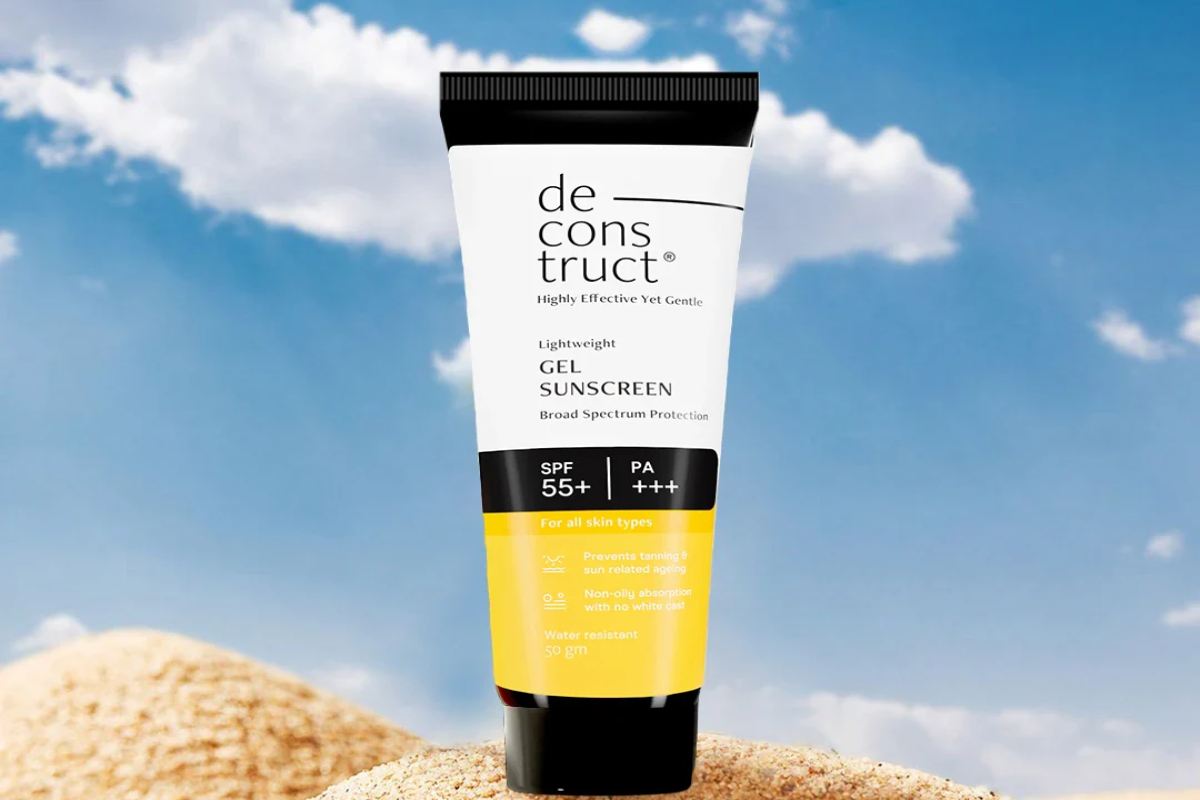
Deconstruct Sunscreen is from India and is a science-led brand. Its first product was a Gel Sunscreen which has now been upgraded to SPF 50 PA++++ with 4 next-generation, photostable UV filters. These are: Tinosorb S, Tinosorb M, Uvinul A Plus and Uvinul T 150. It is fragrance free, non-comedogenic, in-vivo tested and good for Indian hot weather and humid climate for oily, acne prone skin. It is not recommended for sensitive skin or mineral-only sunscreen.
If you have been Googling ‘deconstruct sunscreen’ in the past few weeks, then I‘m assuming you‘re trying to decipher one of three questions: Is the ingredients safe or not? Will it actually do the job for Indian skin/whatever weather you‘re in?and Is all the hype justified?well, I got all of that (as well as a few things most reviews don‘t) for you.
Table of Contents
What Is Deconstruct Sunscreen?
Deconstruct is an Indian D2C skincare brand that emphasizes ingredient transparency and science-backed formulations. Their hero product Gel Sunscreen for Oily Skin SPF 50 PA++++ is one of the most discussed affordable sunscreens in the country today, and the reasons are clear.
Later on the brand introduced a substantial formulation facelift in the beginning of 2026, where four new generation, very photostable chemical UV filters were used in replace for the previous generation chemical UV filters. Deconstruct was among the first local Indian brands to introduce four new generation, very photostable (broad spectrum) UV filters in its core sun care portfolio–Tinosorb S, Tinosorb M, Uvinul A Plus and Uvinul T 150.4
That‘s an upgrade that actually means something, not just a new word.
Understanding the Deconstruct Sunscreen Ingredient List
So filter by filter we go, for this is the part where most articles either dumb it down or skip altogether.
The Four UV Filters (And Why They Were Chosen)
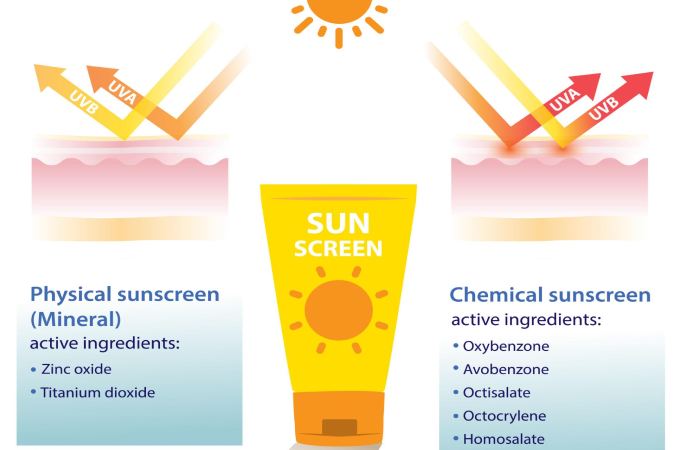
The new Deconstruct formula includes Diethylamino Hydroxybenzoyl Hexyl Benzoate (Uvinul A Plus), Ethylhexyl Triazone (Uvinul T 150), Bis-Ethylhexyloxyphenol Methoxyphenyl Triazine (Tinosorb S), and Methylene Bis-Benzotriazolyl Tetramethylbutylphenol (Tinosorb M). So each one actually does:
- Uvinul A Plus (DHHB): A photostable UVA filter with peak protection at 354nm. Unlike avobenzone (the old-school UVA filter), this one doesn’t degrade under sunlight.
- Uvinul T 150 (Ethylhexyl Triazone): Described as one of the most photostable UVB absorbers currently available. Oil-soluble, which helps it spread evenly in the formulation.
- Tinosorb S (Bemotrizinol): A broad-spectrum filter covering both UVA and UVB (280–400nm). It is one of the best sunscreen agents known today — very photostable, it hardly deteriorates in the presence of UV light and is also useful in stabilizing other less stable sunscreen agents.
- Tinosorb M: A hybrid physical-chemical filter that provides full 280–400nm coverage with micro-fine particles that boost SPF without a heavy white cast.
None of these four filters are FDA-approved for use in the United States due to regulatory bottlenecks — but they are widely used and approved across the EU, Australia, Japan, and India. That’s an important context to understand if you’ve read conflicting things online.
The Supporting Ingredients
Beyond the UV filters, the formula includes:
- Glycerin + Phospholipids: Glycerin pulls water into the skin; phospholipids are skin-identical lipids that mimic cell membrane structure, helping with hydration and absorption without greasiness.
- Squalane: A lightweight, plant-derived emollient with a comedogenicity rating of 0–1. Good for oily skin.
- Cetearyl Olivate + Sorbitan Olivate (Olivem 1000): A biomimetic emulsifier derived from olive oil, known for creating stable, skin-compatible formulations.
- Sodium Gluconate: A chelating agent that improves formula stability.
- Phenoxyethanol + Ethylhexylglycerin: The preservative system. Well-tolerated by most skin types; not ideal for people with phenoxyethanol sensitivity.
Crucially, the formula is fragrance-free, paraben free, silicone free and oil free which is what makes it suitable for most Indian skin types that are moist and congested.
What SPF 50 PA++++ Actually Means
There seems to be a lot of confusion when it comes to SPF number s and PA Ratings especially in India. Here‘s a clear breakdown:
| Rating | What It Measures | Protection Level |
|---|---|---|
| SPF 50 | UVB protection (sunburn, skin cancer risk) | Blocks ~98% of UVB rays |
| PA++++ | UVA protection (tan, aging, pigmentation) | Highest PA rating available |
| Broad-spectrum | Both UVA + UVB together | Full solar protection |
The PA grading system (-used in India, Japan and South Korea) measures Persistent Pigment Darkening, which is a more accurate indicator for darker Indian skin tones (whose primary concern is tan and hyperpigmentation, not sunburn alone). PA++++ is a more comprehensive measure, though not all SPF 50 screens have it.
Another thing to keep in mind: as of January 10, 2026, in-vivo testing is a requirement in India for SPF verification of all sunscreen labels, meaning that getting an SPF test on in-vivo-certified sunscreen was the new gold standard for real eye protection. Deconstruct‘s SPF 50-titled sunscreen was in-vivo tested according to ISO 24444 standards, meaning the SPF 50 on the label is based on actual usage on human skin and not lab testing.
What Is Photostability and Why It Matters for Indian Conditions
This is the least explained concept.
Photostability is the stability of the UV filter when exposed to sunlight. Early chemical filters such as avobenzone the UV protection can deteriorate rapidly; being completely destroyed in around an hour of sunlight. Decomposition of the UV filters on exposure to the sun may result in reduced protection despite the SPF indicating otherwise.
But for those based in Hyderabad, Chennai or Mumbai where the UV Index regularly reaches 10–12 between 10am and 4pm, it is not a trivial matter. Sunscreen that wears off during your commute is providing less protection than it states on the bottle.
Deconstruct‘s new-gen, four-filter formula is much more built to withstand this breakdown, which is the key why the reformulaztion is not simply marketting.
Who Is Deconstruct Sunscreen Best For?
This product works best for:
- Oily and combination skin types — the gel texture absorbs quickly and doesn’t add shine or greasiness throughout the day
- Acne-prone skin — non-comedogenic, no pore-clogging ingredients
- People building a basic skincare routine — fragrance-free, fuss-free layering with moisturizers and serums
- Active daily use in humid climates — designed specifically for sustained wear in India’s weather conditions
- Budget-conscious buyers — priced around ₹492 for 50g, which is competitive for the ingredient quality
Who Should Think Twice Before Buying It
This is where most reviews go silent. Deconstruct Sunscreen is not universally perfect:
- Extremely sensitive or reactive skin: The formula contains Benzophenone-3 (oxybenzone) in its older version — a filter with some documented sensitivity concerns. The newer formula moves away from this, but always patch test first.
- Those seeking mineral-only protection: This is a purely chemical sunscreen. If your dermatologist has specifically recommended mineral (zinc oxide or titanium dioxide) sunscreens — say, for post-procedure skin, rosacea, or very reactive skin — this isn’t the right fit.
- Fungal acne (Malassezia folliculitis) sufferers: Glyceryl Behenate in some variants may not be Malassezia-safe. Check the latest ingredient list before purchasing.
- Under-18 or pregnant users: some active ingredients in topical sunscreens, particularly organic or chemical UV filters, have raised concerns regarding their potential adverse effects on human health, including cutaneous reactions and systemic absorption, which may contribute to endocrine disruption. As a precaution, pregnant users or those with hormone-sensitive conditions may prefer to consult a dermatologist before committing to a chemical-only formula.
Common Mistakes People Make With Deconstruct Sunscreen
Even a well-formulated sunscreen fails when applied incorrectly. Here’s what goes wrong most often:
1. Using too little product. The standard recommendation is two finger lengths of product for the face and neck — roughly ¼ teaspoon. Most people use half that amount, which can reduce effective SPF by 50–75%.
2. Applying too late. Apply the sunscreen at least 15 minutes before stepping out. Chemical filters need time to bind to the skin and begin absorbing UV radiation.
3. Not reapplying. For effective protection, reapply every 2–3 hours, especially when outdoors or after sweating. No sunscreen — not even SPF 50 — maintains full protection without reapplication.
4. Skipping it on cloudy days or indoors. UVA rays penetrate clouds and glass. If you sit near a window, UV-induced aging and pigmentation can still occur.
5. Mixing it with incompatible actives. Avoid applying this sunscreen at the same time as AHAs/BHAs or strong retinoids. Use actives the night before, and apply sunscreen as the final morning step after moisturizer.
Myths vs Facts About Deconstruct Sunscreen
Myth: Chemical sunscreens cause cancer. Fact: There is no peer-reviewed evidence that correctly applied chemical sunscreens cause skin cancer. In fact, consistent SPF use is linked to significantly reduced risk of UV-induced skin damage and photoaging, according to research published in the International Journal of Dermatology (2025).
Myth: You don’t need sunscreen if your moisturizer has SPF. Fact: Moisturizers with SPF are not applied in sufficient quantities to deliver the labelled protection. They also move and absorb differently than a dedicated sunscreen.
Myth: Higher SPF means you don’t need to reapply. Fact: SPF measures protection strength, not duration. Reapplication is mandatory regardless of SPF value.
Myth: Indian skin doesn’t burn, so sunscreen is optional. Fact: Darker skin tones have more melanin, which offers some natural protection — but they are just as susceptible to UVA-induced pigmentation, tanning, and photoaging. UV-induced hyperpigmentation is one of the top dermatological complaints in India.
How Deconstruct Compares to Other Indian Sunscreens
| Feature | Deconstruct (New Formula) | Minimalist SPF 50 | Dot & Key SPF 50 |
|---|---|---|---|
| UV Filters | 4 new-gen photostable | Mix of old + new gen | Mix |
| PA Rating | PA++++ | PA++++ | PA++++ |
| In-Vivo Tested | Yes (ISO 24444) | Partially | Varies |
| Fragrance-Free | Yes | Yes | Some variants |
| White Cast | None | Minimal | Minimal |
| Best For | Oily/acne-prone | All skin types | Dry-combination |
| Price (50g approx.) | ₹492 | ₹429 | ₹595 |
A Practical Application Guide

- Cleanse and tone your skin as usual.
- Apply your serum (e.g., Vitamin C, Hyaluronic Acid) and allow it to absorb fully.
- Follow with a lightweight, oil-free moisturizer if needed.
- Apply two finger lengths of Deconstruct Sunscreen to the face and neck.
- Wait 15 minutes before going outdoors.
- Reapply every 2–3 hours outdoors, or after sweating heavily.
For indoor use: a single morning application is sufficient, but reapply if you’re near a window for extended periods.
FAQs
Q: Is Deconstruct Sunscreen suitable for acne-prone skin? A: Yes. The gel formula is non-comedogenic and oil-free, making it one of the better choices for acne-prone and oily skin types in India. However, a patch test is always recommended before full use.
Q: Does Deconstruct Sunscreen leave a white cast? A: No. Since it uses only chemical (organic) UV filters and no mineral filters like zinc oxide or titanium dioxide, it leaves no white cast and is suitable for all Indian skin tones.
Q: What is in-vivo testing, and why does it matter? A: In-vivo testing measures SPF on real human volunteers under controlled UV exposure, following ISO 24444 standards. Unlike lab-only (in-vitro) testing, this reflects how the sunscreen actually performs on real skin — and it’s now mandatory in India since January 2026.
Q: Can I use Deconstruct Sunscreen under makeup? A: Yes. The lightweight gel texture creates a smooth, non-greasy base that sits well under foundation or BB creams without pilling.
Q: Is the new Deconstruct formula different from the old one? A: Significantly, yes. The old formula used Avobenzone, Octinoxate, and Benzophenone-3 as primary filters — older-generation, less photostable options. The 2026 formula replaces these with four next-generation filters: Tinosorb S, Tinosorb M, Uvinul A Plus, and Uvinul T 150, which maintain stability under prolonged UV exposure.
Q: Should pregnant women use Deconstruct Sunscreen? A: Out of caution, pregnant individuals are often advised to favour mineral sunscreens. Consult your OB-GYN or dermatologist before using chemical-filter sunscreens during pregnancy.
Q: How much product should I use? A: Two finger lengths — roughly ¼ teaspoon — for the face and neck combined. Using less than this reduces the effective SPF you actually receive.
Image Suggestions
| # | Section Placement | Image Idea | SEO Filename | ALT Text | Image Title |
|---|---|---|---|---|---|
| 1 | Above the fold / Hero | Deconstruct Gel Sunscreen tube against a white background with UV rays graphic | deconstruct-gel-sunscreen-spf50-pa4-review.jpg |
Deconstruct Gel Sunscreen SPF 50 PA++++ tube front view | Deconstruct Sunscreen – SPF 50 PA++++ Gel Formula |
| 2 | UV Filter section | Clean infographic of 4 UV filters with coverage range (UVA/UVB spectrum) | deconstruct-sunscreen-uv-filter-tinosorb-uvinul-chart.jpg |
Infographic showing Tinosorb S, Tinosorb M, Uvinul A Plus, Uvinul T 150 UV coverage range | New-Generation UV Filters in Deconstruct Sunscreen |
| 3 | Application Guide section | Step-by-step visual of skincare routine order: serum → moisturizer → sunscreen | sunscreen-application-routine-order-india.jpg |
Correct skincare routine order showing sunscreen applied last in morning routine | How to Layer Deconstruct Sunscreen in Your Morning Routine |
| 4 | Comparison Table section | Side-by-side product flat lay of Deconstruct, Minimalist, and Dot & Key sunscreens | indian-sunscreen-comparison-deconstruct-minimalist-dotandkey.jpg |
Comparison of Indian sunscreens Deconstruct, Minimalist, and Dot & Key SPF 50 | Best SPF 50 PA++++ Sunscreens in India – Side by Side |
Final Conclusion
Deconstruct Sunscreen has evolved from a decent budget option into one of the most scientifically credible, everyday-use sunscreens available in India right now. The 2026 reformulation — built around four photostable, next-generation UV filters, in-vivo tested SPF 50 PA++++, and a lightweight gel base — directly addresses the real-world demands of Indian weather and Indian skin.
It is not flawless. Those with fungal acne, extremely reactive skin, or a preference for mineral-only protection should look elsewhere. But for the majority of oily, combination, and acne-prone skin types navigating India’s high UV environment, deconstruct sunscreen offers genuine protection at a transparent price point — backed by ingredients, not just claims.
Sun protection in India isn’t optional. But now, at least, choosing the right one is a little easier.