

Table of Contents
Introduction
Facial redness is one of the most common skin complaints in India — yet it is also one of the most misunderstood. Many people assume it is simply sensitive skin or an allergic reaction, apply a random cream, and hope it fades. Often, it does not.
The truth is that redness on the face has multiple causes, each requiring a different treatment approach. Applying the wrong product on the wrong type of redness can make the problem significantly worse. This guide explains exactly what causes facial redness, how to treat each type correctly, and how to prevent it from recurring — with specific advice for Indian skin tones, climate, and lifestyle.
| Key Insight
Most cases of facial redness in India are either misdiagnosed or self-treated incorrectly. The single most common mistake is using steroid-based fairness creams without a prescription — a habit that can permanently damage the skin barrier and trigger steroid-induced rosacea. |
What Exactly is Facial Redness?
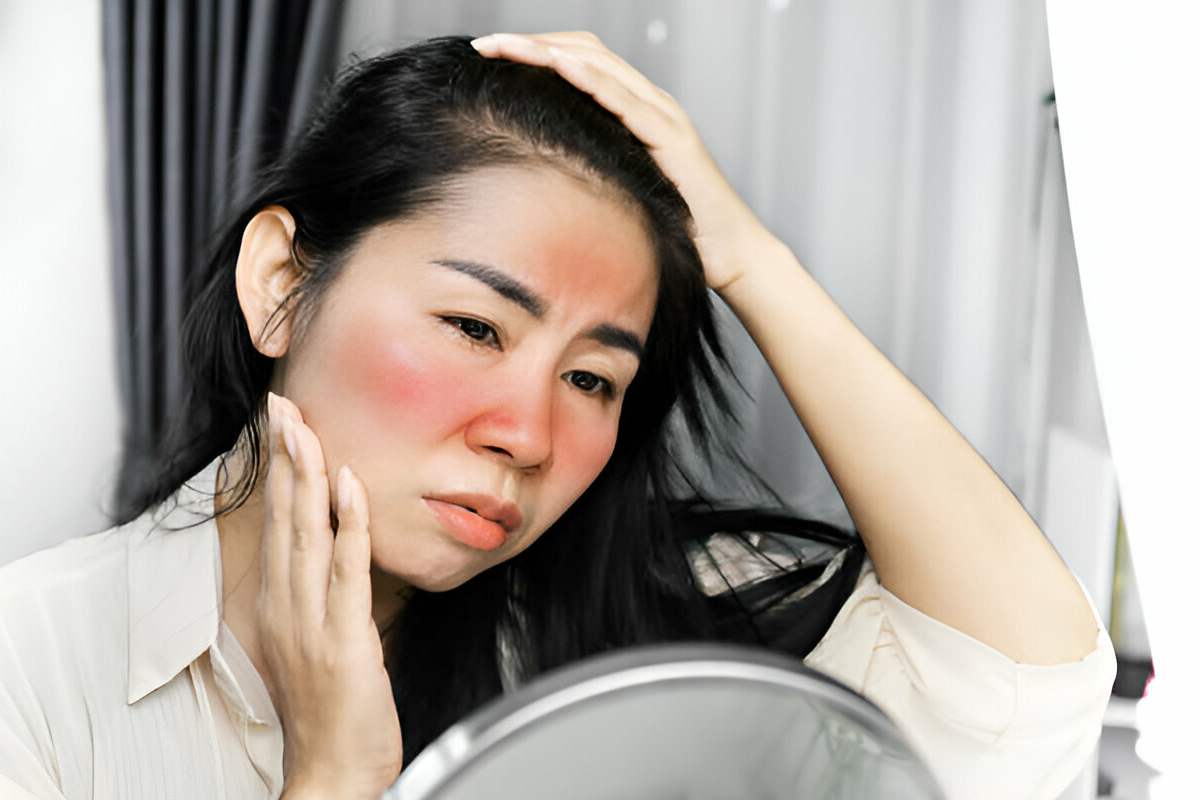
Facial redness refers to an abnormal red, flushed, or inflamed appearance across areas of the face — most commonly the forehead, cheeks, nose, and chin. It may be temporary (lasting minutes to hours) or persistent (lasting days, weeks, or becoming chronic).
Redness is caused by the dilation of small blood vessels (capillaries) near the skin’s surface. When these vessels widen, more blood flows to the surface, producing the characteristic red or pink colour. In people with darker Indian skin tones (Fitzpatrick III–VI), this can appear as a warm, brownish-violet tinge rather than obvious redness — meaning the condition is frequently under-diagnosed.
| Prevalence Data
Rosacea — one of the most common causes of chronic facial redness — affects an estimated 415 million people worldwide. In India, awareness remains critically low. A 2019 study in the Journal of the American Academy of Dermatology confirmed that rosacea affects people of all skin tones, including South Asian populations, often presenting differently than in fair-skinned individuals. |
What Causes Redness on the Face? — 7 Key Causes Explained
Understanding the specific cause of your redness is the most important step. Treating the wrong cause with the wrong product will make things worse. Here are the seven most common causes:
1. Rosacea
Rosacea is a chronic inflammatory skin condition and one of the leading causes of persistent facial redness. It most commonly affects the central face and can cause visible blood vessels, acne-like bumps, burning, and in severe cases, skin thickening.
Rosacea is not caused by poor hygiene. Research points to multiple contributing factors including immune system dysfunction, a skin mite called Demodex, and bacterial involvement. It is a lifelong condition with no cure, but it can be managed effectively with the right treatment.
According to the American Academy of Dermatology (AAD), rosacea is increasingly being diagnosed in people of Asian, Latin American, and South Asian ancestry — though symptoms may appear differently on darker skin tones.
2. Dilated Blood Vessels (Vascular Flushing)
Sudden temperature changes — stepping from an air-conditioned room into hot Indian summer air — cause blood vessels to rapidly dilate, producing the classic flush of red or warm skin. Over time, if this happens repeatedly, the capillaries can become permanently dilated, creating visible red lines called telangiectasia (spider veins). Once these develop, they do not reverse on their own.
3. Sun Exposure (UV-Induced Inflammation)
India has one of the highest average UV indexes in the world. UV radiation damages the skin’s surface cells and dilates blood vessels, producing redness, warmth, and peeling. Even on cloudy days, UV radiation penetrates clouds and causes cumulative sun damage. For Indian skin types, prolonged sun exposure without SPF also triggers post-inflammatory hyperpigmentation (PIH) on top of existing redness.
4. Acne and Post-Acne Inflammation
Active acne causes localised redness around each breakout due to bacterial infection and the body’s inflammatory response. When a pimple ruptures or is picked, it can become severely inflamed, leaving behind both redness and a dark mark (PIH). This layered concern is extremely common in Indian patients.
Real-world example: Priya, a 24-year-old from Pune, came in with persistent red patches on both cheeks. She had been applying a heavy moisturiser for three months, thinking it was dry skin. On examination, it was papulopustular rosacea — a type that mimics acne. The heavy cream had been making it worse. After switching to a rosacea-specific protocol with azelaic acid and SPF, her skin improved significantly within six weeks.
5. Contact Dermatitis (Allergic Reaction)
Many cases of facial redness in India are caused by contact dermatitis — an allergic or irritant reaction to skincare products, cosmetics, hair dye, or fragrances. Common culprits include parabens, synthetic fragrances, and preservatives. Contact dermatitis typically presents as a localised red rash with itching or burning, appearing within hours to a few days of exposure.
6. Seborrhoeic Dermatitis
This fungal skin condition causes red, flaky, greasy patches — most commonly around the nose, eyebrows, and hairline. It is very common in India due to hot, humid conditions that promote fungal overgrowth. Many people mistake it for dry skin and use the wrong treatment, worsening the condition.
7. Hormonal Changes and Internal Triggers
Hot flashes during menopause, thyroid disorders, and certain medications (including topical steroids and blood pressure drugs) can cause facial flushing. Spicy food, alcohol, and emotional stress are also well-documented triggers — especially for people with a predisposition to rosacea.
| Cause | Key Symptom | Typical Location | Main Trigger |
| Rosacea | Persistent redness, visible vessels | Central face, nose, cheeks | Sun, heat, stress, spicy food |
| Vascular Flushing | Temporary warmth & redness | Whole face or cheeks | Temperature change, alcohol |
| Sun Damage (UV) | Redness + peeling + warmth | Forehead, nose, cheeks | UV exposure without SPF |
| Acne Inflammation | Red bumps, pus-filled spots | T-zone, jawline, cheeks | Bacteria, hormones, diet |
| Contact Dermatitis | Itchy red rash | Where product was applied | Fragrance, preservatives, dye |
| Seborrhoeic Dermatitis | Red flaky oily patches | Nose, eyebrows, hairline | Humidity, fungal overgrowth |
| Hormonal / Internal | Flushing, warmth, no rash | Full face | Hormones, medications, stress |
Facial Redness Treatments: What Actually Works
There is no single treatment for all facial redness. The right approach depends entirely on the underlying cause. Here is a breakdown of clinically supported options:
1. Calming & Anti-Inflammatory Skincare
- Centella Asiatica (Cica): Reduces inflammation and strengthens the skin barrier. Ideal for rosacea-prone and sensitive skin. Found in Dot & Key CICA range and The Derma Co Cica-Glow Face Wash.
- Niacinamide (Vitamin B3): Reduces redness, strengthens barrier, minimises pores. 4–5% concentration works well. Available in Minimalist Niacinamide 10% and The Derma Co serums.
- Azelaic Acid: FDA-approved treatment for rosacea and acne-related redness. Available as a prescription gel in India — ask your dermatologist.
- Aloe Vera: Pure aloe vera gel (fragrance-free, no alcohol) provides immediate cooling relief and is backed by evidence for anti-inflammatory action.
2. SPF — The Most Underrated Redness Treatment
If you do only one thing to manage facial redness, make it daily SPF use. Sun exposure is the most powerful trigger for rosacea flares and UV-induced redness in India.
Board-certified dermatologists at the Cleveland Clinic consistently cite sun protection as the foundation of any redness management protocol. For Indian skin, choose a mineral sunscreen with zinc oxide or titanium dioxide, SPF 30 or higher, applied every morning — even on cloudy days or indoors near windows.
3. Anti-Redness Serums & Depigmenting Treatments
- Vitamin C (Sodium Ascorbyl Phosphate for Indian humidity): Brightens and reduces post-inflammatory redness. Apply in the morning or evening.
- Retinol (0.025–0.05%, low strength): Accelerates cell turnover and reduces visible blood vessels over time. Start twice a week. Not suitable during pregnancy.
- Tranexamic Acid: Particularly effective for the brownish-red discolouration that follows inflammation in darker Indian skin tones.
4. Common Mistakes That Worsen Redness — Avoid These
| Critical Warning for Indian Readers
Do NOT buy topical steroid creams (betamethasone, clobetasol) from a medical store without a prescription to treat redness. Steroid-induced rosacea and permanent skin thinning are extremely common in India due to over-the-counter steroid misuse. What appears to improve in the first two weeks often masks serious long-term damage. |
- Using fairness creams or steroid-based brightening creams without a prescription
- Washing face with hot water — always use lukewarm or cool water
- Physical scrubs and exfoliating nets — micro-tears worsen inflammation
- Applying toothpaste or ice directly to breakouts — toothpaste contains SLS, a known irritant
- Using alcohol-based toners on red or sensitive skin
5. Medical / Clinical Treatments — When Skincare Is Not Enough
- Topical prescription medications: Brimonidine gel, metronidazole, or azelaic acid foam for rosacea
- Oral antibiotics: Subantimicrobial-dose doxycycline for inflammatory rosacea
- Laser and light therapy: IPL and pulsed dye laser can reduce visible blood vessels by 50–75% after 1–3 sessions
- LED therapy: Red LED reduces inflammation; blue LED targets acne-causing bacteria — available in many Indian dermatology clinics
Recommended Daily Skincare Routine for Redness-Prone Skin
| Time | Step | What to Use | Why |
| Morning | Cleanse | Cetaphil Gentle Skin Wash / CeraVe Hydrating Cleanser | Removes overnight sebum without stripping barrier |
| Morning | Serum | Minimalist Niacinamide 10% or Dot & Key CICA Serum | Calms inflammation, strengthens barrier |
| Morning | Moisturise | CeraVe Moisturising Cream / Cetaphil Moisturising Lotion | Hydration reduces sensitivity and redness |
| Morning | SPF | Re’equil Mineral Sunscreen SPF 50+ / Minimalist SPF 50 | Blocks UV — the #1 redness trigger in India |
| Evening | Cleanse | Same gentle cleanser (double cleanse if wearing SPF) | Removes pollution, SPF, sweat buildup |
| Evening | Active | Azelaic acid / Tranexamic acid / Low-strength retinol | Targets redness, pigmentation, cell turnover |
| Evening | Moisturise | Heavier ceramide cream or The Derma Co Barrier Repair | Overnight skin repair and barrier restoration |
| Weekly | Mask | Pure aloe vera gel or CICA sheet mask | Soothing reset — no abrasives or fragrances |
Facial Redness and Indian Skin: What’s Different
- Redness may appear brown or violet on darker Indian skin tones (Fitzpatrick III–VI) — not the classic red seen in Western medical photos. Many Indian patients go undiagnosed for months as a result.
- Post-inflammatory hyperpigmentation (PIH) is much more common in Indian skin. After redness or inflammation subsides, a dark mark often remains, requiring additional brightening treatment.
- Hard water in most Indian cities (Delhi, Mumbai, Bengaluru, Hyderabad) leaves mineral deposits on the skin that disrupt pH balance and worsen sensitivity. Use a micellar water toner after cleansing.
- Ayurvedic home remedies like pure turmeric paste and rose water are generally safe. However, lemon juice, baking soda, and rough besan scrubs can severely irritate sensitive or rosacea-prone skin.
- India’s year-round UV exposure means daily SPF 365 days a year — including monsoon season and cloudy days.
When Should You See a Dermatologist?
See a board-certified dermatologist if you notice any of the following:
- Redness that persists beyond 4–6 weeks despite basic skincare changes
- Visible red or purple lines (telangiectasia / spider veins) on cheeks or nose
- Burning, stinging, or sensation of heat on the face without obvious sun exposure
- Acne-like bumps that do not respond to standard acne treatments
- Eye irritation or dryness alongside facial flushing — may indicate ocular rosacea
- Thickening or bumpy skin, particularly around the nose
| Good News
With the right diagnosis and a consistent treatment plan, most patients see significant improvement in facial redness within 8–12 weeks. Early diagnosis of rosacea in particular produces the best long-term results — do not wait. |
Frequently Asked Questions
Can I use home remedies for facial redness?
Some home remedies are genuinely helpful — pure aloe vera gel, cold green tea compresses, and diluted rose water can calm mild redness safely. However, lemon juice (too acidic), baking soda (too alkaline), and gram flour (besan) scrubs can seriously damage the skin barrier. If home remedies do not improve redness within 2–3 weeks, consult a dermatologist.
Is facial redness the same as rosacea?
No. Facial redness is a symptom; rosacea is a specific chronic skin condition. Many causes of facial redness — sun damage, contact dermatitis, acne — are not rosacea. Only a dermatologist can accurately diagnose rosacea.
Does diet affect facial redness?
Yes, particularly for rosacea-prone individuals. Spicy foods, hot beverages, and alcohol (especially red wine) are among the most consistently documented dietary triggers. Keeping a food diary for 2–4 weeks to identify personal triggers is recommended.
Is redness on the face permanent?
It depends on the cause. Redness from sunburn or minor irritation resolves within hours to days. Chronic redness from rosacea or telangiectasia (spider veins) is not self-resolving but can be significantly reduced with medical treatment including laser therapy. Early treatment produces the best results.
What is the best cream for redness in India?
There is no single best cream — it depends on the cause. For mild sensitivity: CeraVe or Cetaphil moisturisers. For rosacea-type redness: Cica-based products and niacinamide serums from Minimalist or The Derma Co. For persistent redness or visible blood vessels: prescription-strength azelaic acid or laser treatment from a dermatologist.
Conclusion
Facial redness is not a single problem — it is a symptom with multiple possible causes, each requiring a different response. The single most important step you can take is to correctly identify the cause before reaching for any product.
For most Indian readers, the most impactful changes are also the simplest: daily SPF without exception, switching to a gentle sulphate-free cleanser, avoiding steroid creams without a prescription, and seeing a dermatologist if redness persists for more than a month.
Your skin has a remarkable ability to heal when given the right conditions. With the correct diagnosis, consistent care, and sun protection, most people with facial redness — even chronic rosacea — can achieve significant, lasting improvement.
Medical Disclaimer: This article is written for informational purposes only and does not constitute medical advice. If you have persistent facial redness, consult a board-certified dermatologist.