

Last Updated: October 19, 2026
Table of Contents
Laboratory Fridge Freezer: Temperature Stability, Compliance, and Sample Protection
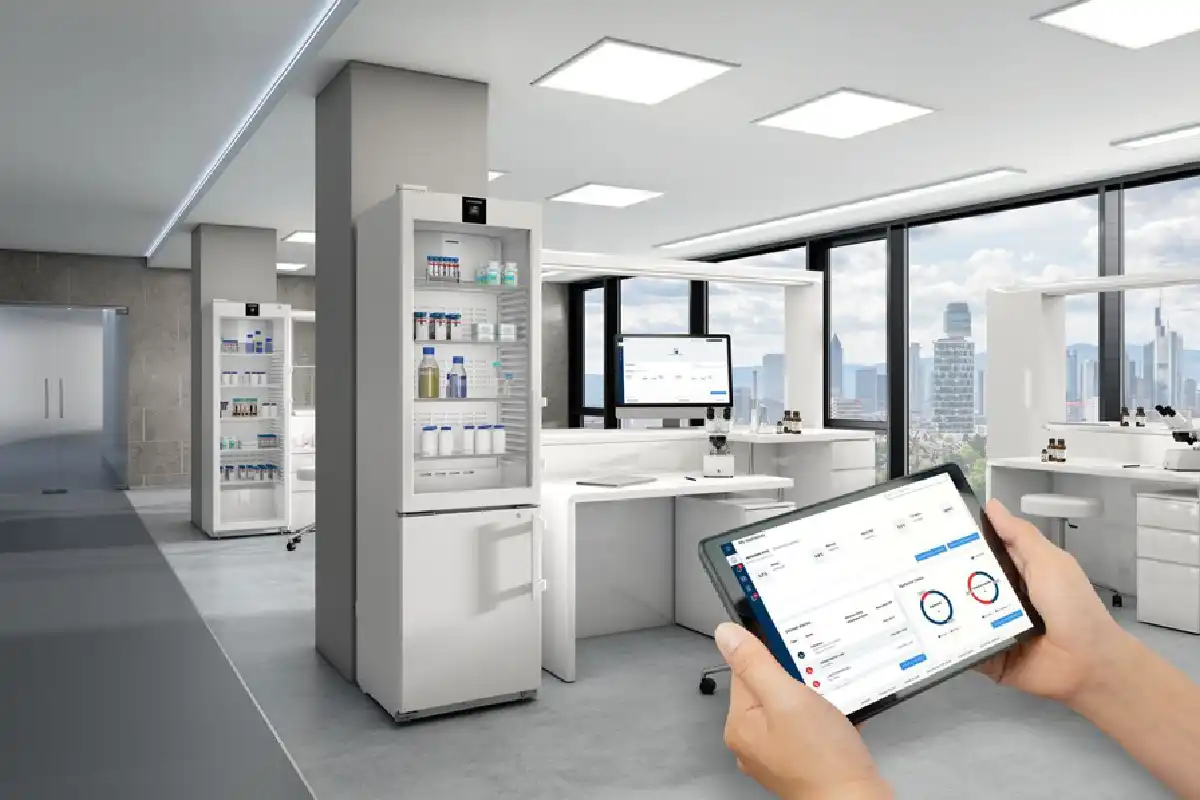
Laboratories, pharmaceutical facilities, and healthcare providers rely on uninterrupted cooling to keep reagents, biological materials, and diagnostic samples usable. A laboratory fridge freezer is built specifically for this task, offering tighter temperature control, monitoring, and documentation features than a general-purpose appliance can provide. When a sample loses its required temperature range for even a short period, the material can degrade in ways that are not visible until a test fails or a result cannot be trusted.
This matters more as audits, accreditation reviews, and internal quality checks become routine parts of laboratory operations. Storage equipment is no longer judged only on whether it keeps things cold, but on whether it can prove, hour by hour, that it did. That shift changes what facilities look for when specifying new refrigeration equipment, moving the conversation from raw cooling capacity toward reliability, traceability, and ease of daily use.
Key Takeaways
- A laboratory fridge freezer maintains narrow, stable temperature bands that protect reagents and biological samples from gradual degradation.
- Continuous monitoring and alarm functions give staff early warning before a deviation turns into a lost batch of material.
- Documentation features support internal quality checks and audit readiness by creating a traceable record of storage conditions over time.
- Hygienic, low-maintenance interiors reduce contamination risk and keep daily laboratory routines simple.
- Healthcare and diagnostic environments benefit from reliable equipment and well-organized workflows that support patient care, testing, and sample handling.
Why Temperature Stability Protects Sample Integrity
Every time a refrigeration unit’s door opens, warm air enters and the compressor has to work to bring the interior back down to its set point. In a standard fridge, this recovery period can be slow and uneven, with warmer air settling near the door and cooler air near the back. A unit engineered for laboratory use addresses this differently: better insulation, more responsive compressors, and airflow designed to distribute cold air evenly reduce the time and the temperature swing needed to recover after a door opening. This matters because many biological materials do not fail all at once — they degrade gradually with each excursion outside their intended range, so the cumulative effect of dozens of small temperature spikes over months can be as damaging as one major failure.
Alarm functions add a second layer of protection. Rather than relying on staff to notice a problem visually, these systems flag deviations as they happen, whether that means an audible alert in the room or a signal sent to a connected monitoring point. The value of an alarm depends less on how loud it is and more on how early it triggers relative to the point where damage actually begins — a unit that only alerts once a sample is already compromised offers little practical protection.
Long-term reliability is a separate but related concern. Laboratory refrigeration typically runs continuously, day and night, for years without the periodic rest that a household appliance gets. Components selected for this kind of duty cycle, along with designs that keep compressor load manageable even during frequent door use, are what allow a unit to hold its performance under demanding, near-constant operating conditions rather than gradually losing cooling capacity as it ages.
Meeting Documentation and Compliance Expectations
Regulatory and quality frameworks in health and life sciences generally expect that storage conditions for critical samples can be demonstrated, not just assumed. In practice, this tends to come down to three things: a continuous record of temperature over time, a way to show that any deviation was caught and addressed, and documentation that can be produced quickly when an auditor or quality manager asks for it. Which of these applies most strictly, and how detailed the record needs to be, depends on the type of material being stored and the internal quality system a facility follows.
Automated data logging changes how this documentation gets created. Instead of manual temperature checks recorded on a clipboard at fixed intervals — a method that only captures conditions at the moment someone happened to look — continuous digital monitoring builds a full timeline of storage conditions, including any excursions and how long they lasted. This kind of record is far harder to dispute during a quality review, because it does not depend on staff remembering to check at the right time. Connected monitoring systems can also route alerts to a phone or a central dashboard, so a deviation overnight or over a weekend does not go unnoticed until the next working day.
The practical benefit of this documentation goes beyond passing an audit. It also gives a laboratory the ability to trace backward if a result looks unexpected, checking whether a storage issue could explain it before assuming an error elsewhere in the process. This is particularly relevant in diagnostic environments, where accurate testing and dependable sample handling support clinical decisions. Facilities such as HOD Karkardooma House of Diagnostics represent the wider diagnostic services landscape in which dependable laboratory processes and quality controls are important to producing reliable results.
That kind of traceability protects both the value of the samples and the credibility of the results derived from them.
Design Choices That Support Daily Lab Work
Ease of handling is often treated as a secondary concern next to cooling performance, but it directly affects how consistently a unit is used correctly. Controls that are simple to read and adjust reduce the chance that a setting gets changed incorrectly during a busy shift, and shelving that can be reconfigured allows a single unit to serve more than one storage purpose as needs shift over time.
Hygienic design plays a similar role. Interiors with smooth surfaces and minimal seams are easier to wipe down thoroughly, which matters because residue or condensation trapped in crevices can become a site for microbial growth over time — a risk that is harder to manage in equipment with more complex internal geometry. Doors with tight, self-closing seals reduce the number of times staff need to physically hold a door open, which also limits temperature loss during routine use.
Maintenance demands shape total cost of ownership as much as the purchase price does. A unit that requires frequent manual defrosting or filter changes adds recurring labor and creates windows where cooling performance temporarily drops. A lab fridge freezer built with automated defrost cycles and low-maintenance components stays closer to its rated performance more of the time, freeing staff from a recurring task that adds little value to their actual lab work.
Supporting Healthcare Facilities and Patient Services
Reliable equipment is one part of maintaining safe, effective healthcare services. Hospitals, laboratories, and other care settings also rely on coordinated staff, clear procedures, and appropriate support services to keep daily operations running smoothly.
For example, Valley Children’s Healthcare is associated with pediatric healthcare, a setting in which accurate diagnostic information and reliable clinical processes are important to patient care. Although laboratory refrigeration is only one component of the wider healthcare system, suitable storage practices help protect materials used in testing and other clinical workflows.
Similarly, healthcare organizations that provide personal care services support patients with everyday care needs. These services differ from laboratory operations, but both are part of a broader healthcare environment where consistency, safety, and reliable processes matter.
Matching Unit Size to Storage Needs
Facilities differ widely in how much they need to store and how their sample volume is likely to change over time. A small diagnostic lab handling routine daily testing may need only a compact unit with a handful of shelves, while a research facility building a long-term sample archive may require substantially more capacity, along with room to expand as collections grow.
Choosing a unit based on current volume alone can lead to overcrowding within a year or two, which in turn increases the temptation to prop doors open or overload shelves in ways that undermine airflow and temperature stability. A more durable approach is to size the unit against expected growth, leaving enough spare capacity that storage density does not have to compromise cooling performance down the line.
Frequently Asked Questions
How does a laboratory fridge freezer differ from a household refrigerator?
The core difference lies in temperature consistency and monitoring. A laboratory unit is engineered to recover quickly after door openings, hold a narrower temperature band, and log conditions continuously, whereas a household appliance is designed mainly for convenience and general food storage rather than documented precision.
What happens if a temperature deviation occurs overnight?
Connected alarm systems are designed to flag deviations as soon as they happen, often routing an alert to staff even outside working hours. Whether a specific deviation compromises stored material depends on how far the temperature moved, how long the excursion lasted, and the sensitivity of the material involved, so any real incident typically calls for a case-by-case review rather than a general rule.
Can one unit serve both refrigerated and frozen storage needs?
Combined units with separate compartments allow a single piece of equipment to hold both 2–8°C materials and deep-frozen samples, which can simplify layout in smaller labs. Larger or higher-volume facilities often prefer separate dedicated units instead, since this avoids any interaction between the two temperature zones and allows each compartment to be optimized for its specific storage task.