

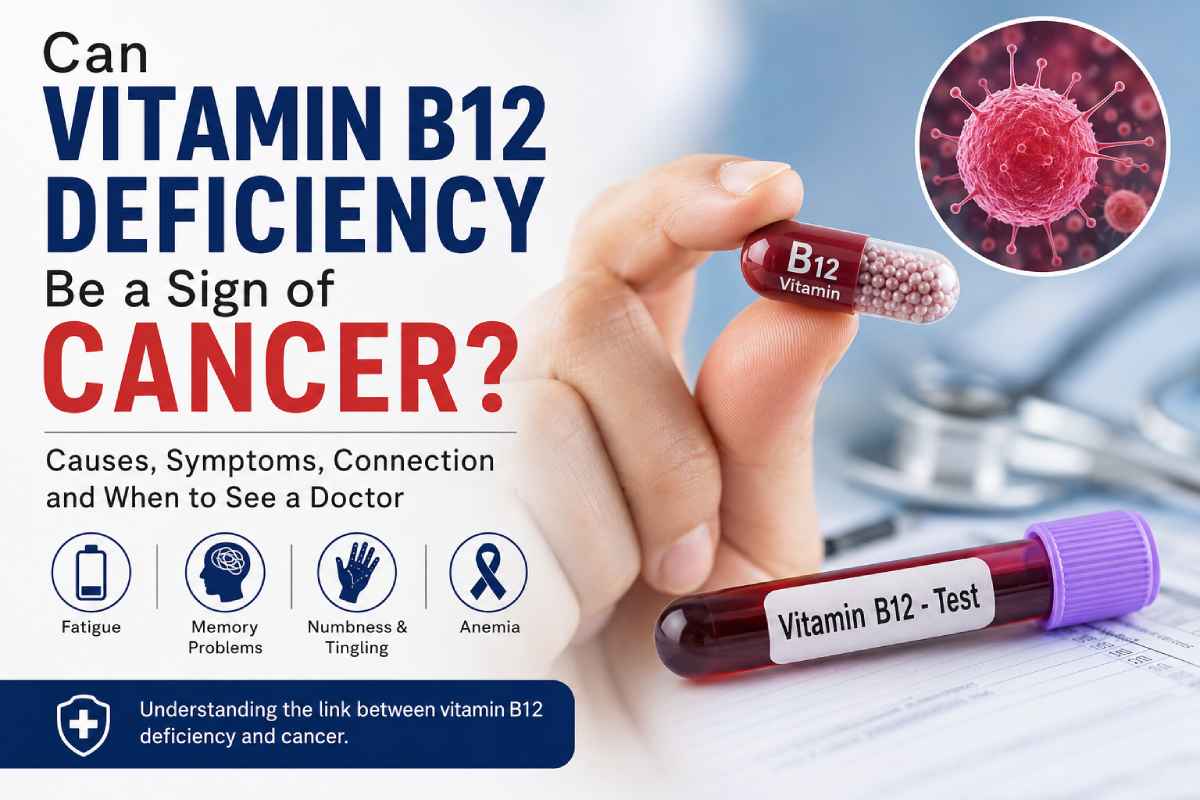
The body requires many important nutrients such as vitamin B12 for overall health, including nerve, DNA, and red blood cell formation. When vitamin B12 levels are low, it can contribute to tiredness, weakness, memory loss, numbness in body parts, and anemia. Although these are all symptoms related to vitamin B12 deficiency, a lot of patients and people often question if a vitamin B12 deficiency indicates cancer.
The direct answer to this is yes; in some specific scenarios, a vitamin B12 deficiency does not automatically mean someone has cancer.
Generally, most people develop the deficiency due to eating habits, digestive problems, getting older, certain medical drugs, and autoimmune conditions. However, in certain situations, cancers and cancer treatments may affect how well vitamin B12 is absorbed or increase the possibility of it being deficient.
Understanding the relationship between cancer and vitamin B12 deficiency can prevent needless worry and alert people not to neglect medical help if symptoms do not improve after a short period of observation.
Table of Contents
What Is Vitamin B12 Deficiency?

Vitamin B12 deficiency when vitamin B12 is lacking in a person. Vitamin B12 is one of the most needed vitamins for your body to produce all the healthy cells and help you have a better central nervous system as well as brain.
Also known as cobalamin, it is naturally found in foods such as:
- Meat
- Fish
- Eggs
- Dairy products
- Fortified cereals
- Nutritional yeast
Since many vitamin’s are not readily absorbed by the stomach and intestines of somebody with a problematic stomach B problems usually lie rooted within the digestive track.
How Vitamin B12 Works in the Body
Vitamin B12 supports several essential biological functions.
| Function | Why It Matters |
| Red blood cell production | Prevents megaloblastic anemia |
| DNA synthesis | Supports healthy cell growth |
| Nerve protection | Maintains myelin sheath around nerves |
| Brain function | Supports memory and concentration |
| Energy metabolism | Helps convert food into usable energy |
When vitamin B12 levels aren’t adequate to produce new red blood cells: The cells grow larger but are immature in shape. This results in problems with the nervous system.
Can Vitamin B12 Deficiency Be a Sign of Cancer?
The answer is sometimes—but not usually.
B12 deficiency is not one of the signs that a tumor is itself there. But it can be found where cancer blocks nutrient digestion and absorption and impairs marrow function, and doctors may not see the cause unless they look for other reasons.
Possible Cancer-Related Causes
Some cancers that may contribute to vitamin B12 deficiency include:
- Stomach cancer
- Gastric lymphoma
- Pancreatic cancer
- Small intestine cancer
- Colon cancer (occasionally)
- Blood cancers affecting bone marrow
- Advanced metastatic cancers
These tumors can decrease stomach acid, destroy stomach lining, interrupt natural factor output, or cause lack of absorption of nutrients.
Common Causes of Vitamin B12 Deficiency
Fortunately, cancer is far from the most common cause.
| Cause | Frequency | Risk Level |
| Poor dietary intake | Very common | Low |
| Vegan or vegetarian diet | Common | Low |
| Pernicious anemia | Common | Moderate |
| Gastric surgery | Common | Moderate |
| Long-term acid reflux medication | Common | Moderate |
| Crohn’s disease | Common | Moderate |
| Celiac disease | Moderate | Moderate |
| Aging | Very common | Low |
| Stomach cancer | Rare | High |
| Intestinal cancer | Rare | High |
Most people diagnosed with vitamin B12 deficiency do not have cancer.
Why Some Cancers Cause Vitamin B12 Deficiency
Cancer may interfere with vitamin B12 in several ways.
1. Reduced Intrinsic Factor
The stomach cells making intrinsic factor may be injured by stomach cancer, leading to poor intrinsic factor, and hence intrinsic factor, for it plays a very important role in the absorption of vitamin B12
2. Damage to the Digestive Tract
Tumors in the stomach or small intestine may:
- Reduce nutrient absorption
- Block digestion
- Cause chronic inflammation
- Affect healthy intestinal tissue
3. Cancer Treatments
Chemotherapy and radiation may affect:
- Appetite
- Digestion
- Nutrient absorption
- Intestinal lining
Some patients become vitamin B12 deficient during treatment even if cancer itself isn’t responsible.
4. Bone Marrow Disorders
Certain blood cancers affect healthy blood cell production.
Examples include:
- Leukemia
- Multiple myeloma
- Myelodysplastic syndromes
Since these symptoms are similar in many blood disorders, some doctors check this B-12 level along with their blood work.
Symptoms of Vitamin B12 Deficiency
Symptoms usually develop slowly over months or years.
Early Symptoms
- Fatigue
- Weakness
- Pale skin
- Mild dizziness
- Shortness of breath
- Poor concentration
Neurological Symptoms
As deficiency worsens:
- Tingling in hands
- Tingling in feet
- Balance problems
- Numbness
- Difficulty walking
- Memory loss
- Depression
- Confusion
Neurological symptoms can become permanent if left untreated.
Digestive Symptoms
Some individuals experience:
- Loss of appetite
- Weight loss
- Nausea
- Diarrhea
- Constipation
- Sore tongue
Symptoms That May Suggest Something More Serious
Despite the common nature of a vitamin B12 deficiency, you’d better check up on your body if it begins to exhibit any of these warnings:
| Symptom | Needs Medical Review? |
| Unexplained weight loss | Yes |
| Blood in stool | Yes |
| Persistent vomiting | Yes |
| Difficulty swallowing | Yes |
| Severe abdominal pain | Yes |
| Ongoing anemia despite treatment | Yes |
| Night sweats | Yes |
| Enlarged lymph nodes | Yes |
These symptoms do not automatically indicate cancer, but they should never be ignored.
Can Vitamin B12 Deficiency Cause Cancer?
No.
Current medical evidence does not show that vitamin B12 deficiency directly causes cancer.
Instead:
- Cancer may contribute to deficiency.
- Deficiency may exist alongside cancer.
- Both conditions can occur independently.
Though researchers are investigating the interactions between how cells metabolize and utilize B12 and cancer, so far, there’s no indication that low levels of the vitamin result in the disease itself.
Who Is Most at Risk?
Certain groups are more likely to develop vitamin B12 deficiency.
| Risk Group | Reason |
| Adults over 60 | Reduced stomach acid |
| Vegans | Limited dietary intake |
| Vegetarians | Lower intake |
| People with Crohn’s disease | Poor absorption |
| Celiac disease patients | Intestinal damage |
| Pernicious anemia patients | Lack of intrinsic factor |
| Gastric bypass patients | Reduced absorption |
| Long-term metformin users | Medication effect |
| Proton pump inhibitor users | Less stomach acid |
How Doctors Diagnose Vitamin B12 Deficiency
Diagnosis usually begins with a detailed medical history.
Common tests include:
- Complete blood count (CBC)
- Serum vitamin B12 level
- Methylmalonic acid (MMA)
- Homocysteine
- Folate level
- Iron studies
If your signs point towards a digestive problem being to the source then we might further investigate:
- Endoscopy
- Colonoscopy
- CT scan
- MRI
- Biopsy
Your doctors would recommend that tests are performed when a symptom or finding suggests some concern is needed.
Vitamin B12 Deficiency vs Cancer Symptoms
Many symptoms overlap, making evaluation important.
| Vitamin B12 Deficiency | Cancer |
| Fatigue | Fatigue |
| Weakness | Weakness |
| Pale skin | Sometimes |
| Tingling hands | Rare |
| Numbness | Rare |
| Memory issues | Occasionally |
| Weight loss | Common |
| Blood in stool | Rare |
| Persistent pain | Rare |
| Enlarged lymph nodes | Rare |
A proper diagnosis requires medical testing rather than symptom comparison alone.
Can Cancer Treatment Cause Vitamin B12 Deficiency?
Yes.
Cancer treatment may increase the risk through several mechanisms.
Chemotherapy
May reduce appetite and affect the intestinal lining.
Radiation Therapy
Radiation involving the digestive tract may impair nutrient absorption.
Gastric Surgery
Resection of parts of the stomach reduces the production of intrinsic factor, which necessitates continued vitamin B12 supplementation by some patients for their entire life.
Treatment for Vitamin B12 Deficiency
Treatment depends on the underlying cause.
Oral Supplements
Suitable for mild deficiency with normal absorption.
Vitamin B12 Injections
Often recommended when:
- Pernicious anemia is present
- Severe deficiency exists
- Nerve symptoms occur
- Absorption is impaired
Dietary Improvements
Foods rich in vitamin B12 include:
| Food | Approximate B12 Content |
| Beef liver | Very high |
| Salmon | High |
| Tuna | High |
| Eggs | Moderate |
| Milk | Moderate |
| Yogurt | Moderate |
| Cheese | Moderate |
| Fortified cereals | Moderate |
| Fortified plant milk | Moderate |
Lifestyle Tips to Maintain Healthy Vitamin B12 Levels
Simple habits can help reduce deficiency risk.
- Eat whole, nutritious meals
- Eat animal products and vitamin-enriched foods.
- Drink Supplements, if recommended.
- Do not try to self-diagnose the causes of chronic fatigue.
- Get the stomach issues treated properly.
- Patients taking an acid-blocking drug for many years may have vitamin levels checked from time to time.
- Go for regular medical examinations.
When Should You See a Doctor?
Seek medical evaluation if you experience:
- Persistent fatigue
- Tingling in hands or feet
- Difficulty walking
- Memory changes
- Ongoing anemia
- Unexplained weight loss
- Blood in stool
- Chronic stomach pain
- Difficulty swallowing
With appropriate treatment, the health outcome tends to improve, regardless of what is the cause; a dietary shortage, a gastrointestinal disorder, or other illness may be blamed.
Common Myths About Vitamin B12 Deficiency
| Myth | Reality |
| Low B12 always means cancer | False |
| Only vegetarians become deficient | False |
| Supplements cure every case | False |
| B12 deficiency is harmless | False |
| Cancer always causes low B12 | False |
| Older adults don’t need testing | False |
Prevention Tips
Although not every case can be prevented, these measures help maintain healthy vitamin B12 levels:
- Consume enough vitamin B12-rich foods.
- Consider fortified foods if following a plant-based diet.
- Discuss supplements with your healthcare provider if you are at risk.
- Have regular blood tests if you have digestive disorders or have undergone stomach surgery.
- Manage chronic medical conditions effectively.
- Avoid ignoring long-term fatigue or neurological symptoms.
Final Thoughts
Could a vitamin B12 deficiency then mean that I have cancer? Absolutely, in a minority of circumstances. The vast majority of those diagnosed with a vitamin B12 deficiency don’t have cancer; their causes include poor diet, problems with the digestive system, various medications, older age, or a more common chronic illness (like an autoimmune disease), known as pernicious anemia.
Instead of concluding the worst, think of the vitamin B12 deficiency as an indicator that further medical investigation is required.
Depending on the severity of the deficiency and a review of your history, your health care professional can then identify the cause through blood, health, or other examinations and treatments.