

Summary
In those aged 13 and above – you should call (or get someone to call) Emergency Medical Services (EMS) before starting CPR – not after! The instant you come across an unresponsive, non-breathing individual aged approximately 12 years and older your first response should be to call emergency services (112 in India / 911 in the US), or send someone to do this at the same time that you start CPR. This rule is based on the 2025 American Heart Association CPR and ECC Guidelines and the rule is applied to cases of cardiac arrest, serious choking, drowning, strokes and a spectrum of other emergencies.
Seconds matter in medical emergencies. But one of the most common and deadly mistakes is waiting too long to dial for help.
Answer: For adults and adolescents, the EMS needs to be activated before starting CPR.
However, having a sense for when to make the call is only one half of the task. You also need to know which emergencies warrant an immediate call, what is meant by “adolescent” in emergency medicine, and exactly what steps to take in the crucial minutes prior to the arrival of paramedics.
This guide covers all of it — using the latest 2025 American Heart Association Guidelines for CPR and Emergency Cardiovascular Care, so you’re working with evidence that reflects current best practice.
Table of Contents
What Does “Activate EMS” Actually Mean?
EMS: emergency medical services, is the generic name for the system of pre-hospital emergency care provided when life-threatening conditions occur by the emergency responders; paramedics, ambulance crews, and trained first responders.
This book has it all merging the new 2025 American Heart Association Guidelines for CPR and Emergency Cardiovascular Care, which means the evidence you study it is the best practice you should be practicing.
“Activating EMS” simply means calling the emergency number:
- India: 112 (national), 108 (ambulance in most states)
- US: 911
- UK: 999
The moment you activate EMS, a trained dispatcher can:
- Guide you through CPR steps in real time
- Send paramedics with AED equipment
- Begin coordinating hospital-level care before the ambulance even arrives
Adults vs. Adolescents: What’s the Difference in Emergency Care?
In emergency medicine and CPR protocols, the boundary matters:
| Age Group | Classification |
|---|---|
| Infants | 0–12 months |
| Children | 1 year to puberty |
| Adolescents | From signs of puberty onward |
| Adults | Typically 18+ (adolescents treated similarly) |
The key point: if a person shows signs of puberty, they are treated as an adult for CPR and EMS purposes. The 2025 AHA Adult Basic Life Support Guidelines explicitly state this.
This matters because the EMS activation sequence differs between younger children (where you sometimes give 2 minutes of CPR first if you’re alone) and adults/adolescents (where EMS comes first, even if you’re alone).
The Core Rule: Call EMS Before CPR for Adults and Adolescents
This is the single most important fact in this article:
For adults and adolescents, activate EMS (call 112/911) BEFORE — or simultaneously with — starting CPR.
Why? Because cardiac arrest in adults is most commonly caused by a heart problem — specifically a shockable heart rhythm called ventricular fibrillation. The most effective treatment for this is defibrillation (an electric shock from an AED), which only paramedics and AED devices can deliver. Every minute without defibrillation reduces the chance of survival by roughly 7–10%.
Calling EMS first ensures the defibrillator arrives as fast as possible.
Compare this to young children, where cardiac arrest is more often caused by breathing failure — so 2 minutes of CPR is given first before activating EMS when a lone rescuer is present.
The 2025 AHA Chain of Survival: Simplified and Unified
The 2025 AHA Guidelines made a landmark change: they merged what were previously separate chains (adult vs. child, in-hospital vs. out-of-hospital) into one unified Chain of Survival. The sequence now applies to adults and adolescents equally:
- Recognize cardiac arrest — check responsiveness and breathing
- Activate EMS — call emergency services immediately
- Begin high-quality CPR — push hard and fast (100–120 compressions/min)
- Use an AED — as soon as one is available
- Advanced care — paramedics take over with drugs, airway management
- Post-arrest care and recovery — hospital treatment and follow-up
As one AHA expert summarized: “Call 911, and push hard and fast” — that’s the foundational sequence that saves lives.
Specific Emergencies That Require Immediate EMS Activation
Knowing the general rule is good. Knowing the exact situations that require it is better.
1. Cardiac Arrest
Activate EMS immediately if the person:
- Is unresponsive and won’t wake up to tapping or shouting
- Is not breathing, or is only gasping (called “agonal breathing”)
- Has no detectable pulse within 10 seconds of checking
Start CPR right after calling — or have a bystander call while you begin compressions.
According to the 2025 AHA Guidelines, out-of-hospital cardiac arrest survival in the US is only around 10.5%, but bystander CPR can double or triple survival chances. Tragically, only about 41% of cardiac arrest victims receive bystander CPR before EMS arrives.
2. Severe Choking (Foreign-Body Airway Obstruction)

Activate EMS if:
- The person cannot speak, cry, or cough effectively
- Their lips or skin are turning blue (cyanosis)
- They become unresponsive after choking
The 2025 AHA Guidelines introduced updated choking guidance: for conscious adults and adolescents, alternate 5 back blows with 5 abdominal thrusts until the object is expelled or the person loses consciousness. If they become unresponsive, activate EMS immediately and begin CPR.
3. Stroke
Activate EMS immediately if you notice any FAST signs:
- Face drooping on one side
- Arm weakness or numbness
- Speech that is slurred or confused
- Time to call 112/911 — NOW
Stroke is a time-critical emergency. Every minute of untreated stroke means approximately 1.9 million neurons die. EMS must be activated immediately — do not wait to see if symptoms improve.
4. Severe Uncontrolled Bleeding
Call EMS if:
- Bleeding is profuse and does not stop with pressure
- Blood is spurting (suggesting arterial damage)
- The person is becoming pale, weak, or confused
Apply firm direct pressure while EMS is on the way, and use a tourniquet if one is available and you’re trained in its use.
5. Drowning
Activate EMS as soon as possible. Do not enter the water unless you are a trained rescuer. Throw flotation material, stay at the scene, and call EMS immediately.
According to the 2024 AHA/AAP focused drowning update, the safest method involves remaining out of the water, calling rescue services, throwing flotation material, and waiting for a professional to arrive. Unlike standard cardiac arrest, drowning-related cardiac arrest is almost always caused by oxygen deprivation — so rescue breaths are especially important once the person is out of the water.
6. Severe Allergic Reaction (Anaphylaxis)
Call EMS immediately if the person has:
- Throat swelling or difficulty breathing after contact with an allergen
- Rapid heartbeat combined with dizziness or collapse
- Skin that is pale, clammy, or flushed with hives
If an epinephrine auto-injector (EpiPen) is available, use it — but still activate EMS. Anaphylaxis can return or worsen even after epinephrine.
7. Seizures
Call EMS if:
- A seizure lasts longer than 5 minutes
- The person does not regain consciousness between seizures
- The person is injured, pregnant, or it is their first seizure
Do not restrain the person. Clear the area of hard objects and time the seizure. EMS must be activated for prolonged or back-to-back (cluster) seizures.
8. Suspected Drug Overdose
Call EMS immediately if the person:
- Is unresponsive or barely responding
- Has slow, shallow, or stopped breathing
- Has blue or purple lips or fingertips
If naloxone (Narcan) is available and an opioid overdose is suspected, administer it — but still call EMS. The 2025 AHA guidelines introduced a new algorithm for suspected opioid emergencies, including clearer guidance on naloxone for lay rescuers.
What to Do While Waiting for EMS: Step-by-Step
Once you’ve activated EMS, here’s what to do:
Step 1: Ensure scene safety Never approach a person if the environment is dangerous (traffic, fire, electrical hazards).
Step 2: Check responsiveness Tap firmly on the shoulders and shout: “Are you okay? Can you hear me?”
Step 3: Call for help If someone else is present, assign them to call EMS and locate an AED. If you’re alone, call EMS using your mobile phone — many smartphones allow hands-free calls.
Step 4: Check breathing Look for chest rise. If the person isn’t breathing or is only gasping, begin CPR immediately.
Step 5: Begin high-quality CPR
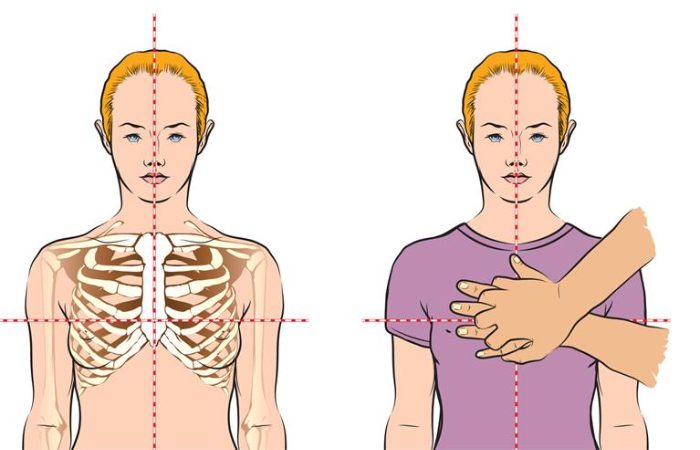
- Place the heel of one hand on the center of the chest, other hand on top
- Compress at least 2 inches deep at 100–120 compressions per minute
- Allow full chest recoil between compressions
- If trained, provide rescue breaths at a 30:2 ratio
Step 6: Use an AED as soon as it arrives Turn it on and follow the audio prompts exactly. Do not stop CPR until the AED is ready to analyze.
Common Mistakes People Make When Activating EMS
❌ Waiting to see if the person “wakes up”
Unresponsiveness is not something to wait out. If they won’t respond to stimulation, call immediately.
❌ Assuming someone else will call
In crowds, bystanders often assume someone else has already called. Always point to a specific person and say: “You — call 112 right now.”
❌ Calling EMS after attempting long CPR
For adults and adolescents, the call should happen first or simultaneously. Delaying the call delays the defibrillator.
❌ Hanging up on the dispatcher
Stay on the line. Dispatchers can coach you through CPR and tell you when the ambulance is close.
❌ Moving the person unnecessarily
Unless the location is unsafe, do not move a collapsed person. Moving them can worsen spinal injuries or interrupt CPR.
Myths vs. Facts About Calling EMS
| Myth | Fact |
|---|---|
| “I should do CPR first, then call.” | For adults/adolescents, EMS should be called first or simultaneously. |
| “Only doctors can activate EMS.” | Anyone can — and should — call emergency services. |
| “If they’re breathing, skip EMS.” | Some emergencies (stroke, overdose, anaphylaxis) need EMS even if breathing continues. |
| “CPR might hurt them.” | The risk of harm from unnecessary CPR is very low — always better to act. |
| “EMS is only for heart attacks.” | EMS handles all life-threatening emergencies: trauma, stroke, overdose, breathing problems, and more. |
Bystander CPR Gap: Why Your Action Matters
Here‘s a stark fact: only an estimated 41% of out-of-hospital cardiac arrest patients receive CPR from a bystander prior to EMS arrival. That‘s a problem.
The 2025 AHA Guidelines also recommend communitywide CPR training, for example towards the education of children 12 years and older. There is evidence that adolescents, de facto, are able to perform adequate CPR and defibrillation.
If you have not done a CPR course yet, think about signing up to one. The American Heart Association and Red Cross run certification courses and in India, the National Disaster Management Authority (NDMA) and many hospital networks have public first-aid training courses as well.
EMS Activation: India-Specific Context
In India the emergency services are being upgraded at a fast pace, and are improving, but there is still a varied response mechanism. So here what is required:
- 112 is the all-in-one national emergency number (police, fire, ambulance).
- 108 is the universal ambulance helpline number in most of the states administered through the National Health Mission.
- The difference in response times can be substantial between a metro city and rural communities. This makes bystander CPR all the more important in rural locations
- Public AEDs are increasing in airports, shopping malls and workplaces–be aware of where your nearest one is
In longer time EMS response cities, the only way to provide good quality CPR and sustain the patient prior to arrival is to do it on the way to the hospital.
When NOT to Call EMS (And Handle It Yourself)
Not every situation needs an ambulance. Minor emergencies can often be managed at home:
- Small cuts with controlled bleeding
- Mild allergic reactions (rash only, no breathing issues)
- Mild fever without confusion or seizure
- Minor sprains or bruises
However, when in doubt, call EMS. The cost of an unnecessary call is far lower than the cost of a delayed one.
FAQs
Q1. Adult/adolescent – should we call EMS first or after CPR?
Before – or at the same time. Adult/adolescent arrest usually caused by rhythm disturbance that needs defibrillation. Defibrillator can be delivered quicker if EMS team is called first. Call while performing CPR, or call after and so you can start doing CPR immediately.
Q2. What is the right emergency number to dial in India?
Dial 112 [for all emergencies], 108 [ambulance] in most states of India. These are free calls made from any mobile or landline.
Q 3. What should I do if I am alone with an unresponsive adult?
Dial 999 (or other emergency service) on your mobile and hold the phone to your ear while you start doing CPR (leave the line open if in the UK). Do not leave the person until absolutely necessary (if you do not have a mobile phone and need to find one, give two minutes of CPR and then leave).
Q4: What is an “adolescent” in emergency medicine?
Adolescents are defined as pubertal individuals. For CPR and EMS, all pubertal patients regardless of age are managed according to adult algorithms.
Q5: Do I need to call EMS if someone has a seizure?
Not for all seizures – but yes if your loved one is having a seizure longer than 5 minutes, is not waking up inbetween seizures or if they are having their first seizure. Call the EMS if they are injured and if you are unsure.
Q6: Is it okay to initiate CPR when you are unsure of the patient being in cardiac arrest?
Yes. According to 2025 AHA guidelines, the possibility of causing harm by doing CPR on a patient who is not in cardiac arrest is very slim, it is always best to take action than delay.
Q7: What do I say to the EMS dispatcher?
Give: your location (be as specific as possible), what happened, the person‘s age and gender, and if they are breathing or conscious. Remain on the line and carry out the dispatcher!
Q8: Are teens able to learn CPR and respond in emergencies?
Yes. The 2025 AHA guidelines specifically mention how children 12 years and above are able to effectively learn CPR and defibrillation skills. By teaching teens the necessary skills, this can help save lives in school and community settings.
Final Conclusion
Understanding when to contact/activate EMS for adults and teens is one of the most essential and life saving Bits of health information you can possess.
This guideline is clear, supported by the 2025 AHA Guidelines and it applies whether you are on a street in Mumbai, a school in Hyderabad or a workplace in Delhi: call EMS first and give CPR. It is no different for adults or teenagers: every second without a defibrillator is a second that the patient‘s hear cannot afford to lose.
You don‘t have to be a doctor to save a life. You have to realize it is an emergency, make the call and give CPR. That pattern alert, confident and to the point is precisely what this guide was designed to help you achieve.
If you‘ve never done a CPR training course, today is your day to get in the mood. It takes a couple of hours. It could save some one ‘s life.