

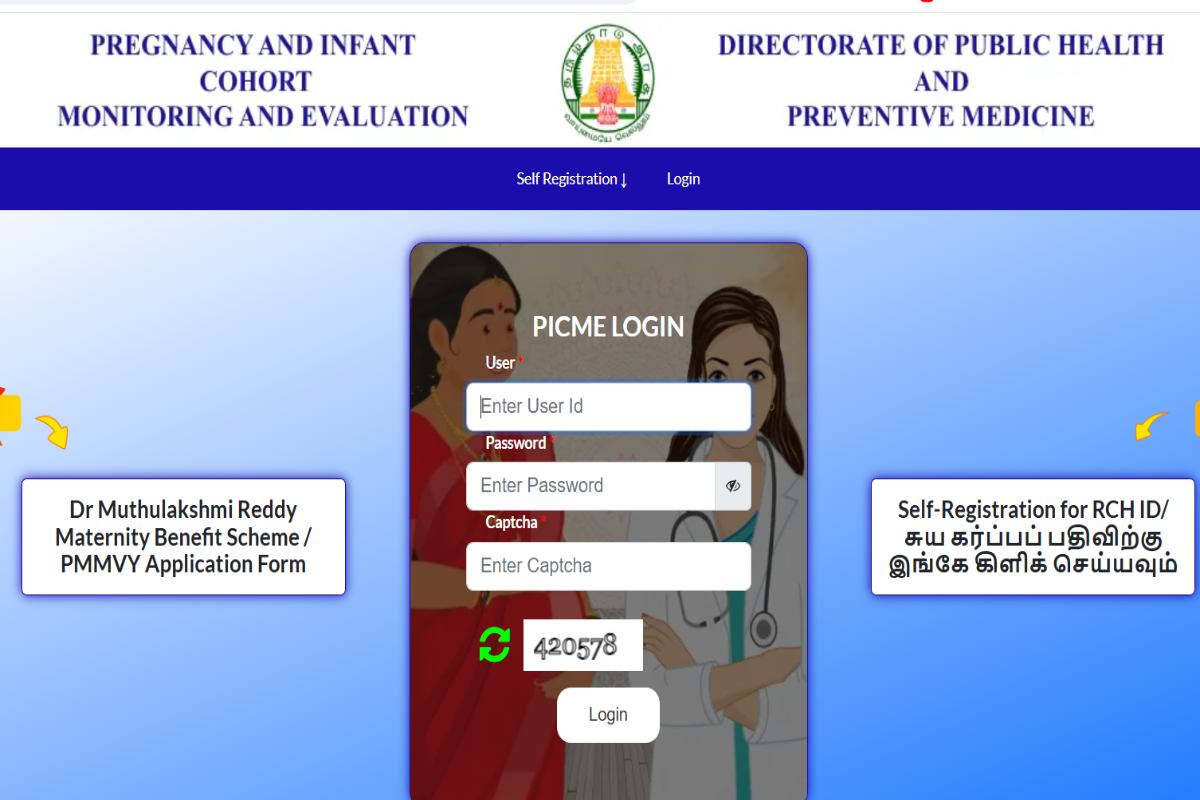
Summary The Tamil Nadu government‘s number for tracking pregnancies and improving mother and child health (picme.tn.gov.in), allows registration of every pregnant woman in the state to enable her to receive 12 digit RCH ID, free antenatal checkups and vaccines, entitlements of 18,000 under the Dr.Muthulakshmi Reddy Maternity Benefit Scheme and children birth certification process at the earliest (preferably at a wholistic 12 weeks). Registration is free, offline and online, with less 30 minuts.
Being pregnant and living in Tamil Nadu or even assisting a family member from within the state you‘ve probably heard of the word PICME or been asked to “get your PICME number”. But perhaps you were a little thrown off when accessing the government website for the first time during your pregnancy and already being overwhelmed with a lot of other things.
This is what you need to know about picme.tn.gov.in. Including what it is, how it benefits you and your new arrival, how to sign up one step at a time, and more.
Table of Contents
What Is PICME? (Simple, Clear Definition)
What is PICME? PICME-Pregnancy and Infant Cohort Monitoring and Evaluation. Is a system implemented by Tamil Nadu government to monitor all pregnant women journey from the time of conception to wait for birth registration.
In practical terms, PICME is an online government portal — officially accessible at picme.tn.gov.in and the upgraded version at picme3.tn.gov.in — where pregnant women in Tamil Nadu are registered, monitored, and connected to essential healthcare and financial support systems.
Just think of it as the government file on your pregnancy. All of your antenatal visits, your vaccinations, the claim for your maternity grant, the birth certificate for your baby all goes via this file.
Once a woman completes her registration with PICME, a unique PICME RCH ID is generated for her. This PICME RCH ID is the Government‘s health card ID for pregnant women. All the records of medical tests, antenatal check ups and follow-up services are now associated with one single ID so it will create more transparent and effective health care services.
The present one (PICME 3.0) is the modernized digital platform that comprises of the following facilities to women (registered under PICME of course);register at home using their own computer, Monitor their pregnancy online, availing services at a much faster rate than the previous version.
Why PICME Registration Matters: The Medical Case for It
Many women defer registration thinking that it was just a bureaucratic procedure. No. Early registration has measurable health implications for mother and child.
According to the definition of quality antenatal care of National health mission,50 antenatal care visits, registration of pregnancy within the first trimester, physical examination, detection of danger signs with referral, consumption of 100 or more days of IFA (Iron and Folic Acid) tablets, essential laboratory investigations, tetanus toxoid injection, and counselling are recommended.52
Without PICME registration, none of these services are recorded, accessed, or provided in an organized fashion. Your VHN will be unable to contact you if you are not part of the system. Your government support will be unable to be used without your RCH ID. And your baby‘s birth certificate will be a lot more difficult to obtain without it.
As per WHO guidelines for antenatal care, quality ante natal care which includes early registration and complete follow up is one among the most economical interventions to reduce maternal and newborn death which are mostly preventable. Tamil Nadu has achieved SDG MMR which is just 38 maternal death per 100,000 live births (Best in India), partly due to effective systematic monitoring programmes like PICME.
Early registration (before 12 weeks) means that you will not miss out on the first installment of money, you will not miss the early pregnancy checks, and any high-risk indicators will be picked up early by your health worker before any problems occur.
Who Is Eligible to Register on PICME?
Any pregnant woman living in Tamil Nadu is entitled to register under PICME. Basic registration requirements are minimum without any age restriction or any income ceiling.
However, for the monetary benefit (covered below), additional criteria apply with regard to being categorized by income, category, and order of birth.
For basic PICME registration and healthcare access, you need:
- Be pregnant and be currently living in Tamil Nadu (whether permanently or temporarily is irrelevant)9.
- An authentic Aadhaar card (the mobile number must be linked to your Aadhaar for OTP verification during the online self-registration)
- A mobile number to send you your RCH ID and updates
Documents You Need Before Registering
Keep the following ready before you begin — having them in hand makes registration much faster:
- Aadhaar card of the pregnant woman
- Aadhaar card of the husband (for scheme eligibility)
- Bank passbook (with IFSC code and account number, for direct benefit transfer)
- Address proof (utility bill, ration card, or rental agreement)
- A recent passport-size photograph
- For scheme eligibility: BPL card, MGNREGA job card, SC/ST certificate, or e-Shram card (as applicable)
How to Register on PICME TN Gov In: 3 Methods

There is no single “right” way to register. Choose whichever method works best for your situation.
Method 1: Online Self-Registration (Recommended)
This is the fastest route if you have internet access and an Aadhaar-linked mobile number.
Step 1: Visit the official PICME portal at picme.tn.gov.in or the PICME 3.0 portal at picme3.tn.gov.in.
Step 2: On the homepage, click “Generate RCH ID by Yourself” or “Pre-registration by Public.”
Step 3: Enter your 12-digit Aadhaar number. An OTP will be sent to your Aadhaar-linked mobile number. Enter it to verify your identity.
Step 4: Fill in the registration form with your personal details — name, date of birth, address, mobile number, and pregnancy details including your Last Menstrual Period (LMP) date and expected delivery date.
Step 5: Submit the form. You will receive an acknowledgment with a pre-registration ID via SMS.
Step 6: Your local Village Health Nurse will verify your details and complete the registration. After verification, your 12-digit RCH ID will be generated and sent to you by SMS.
Method 2: Offline Registration Through Your VHN or PHC
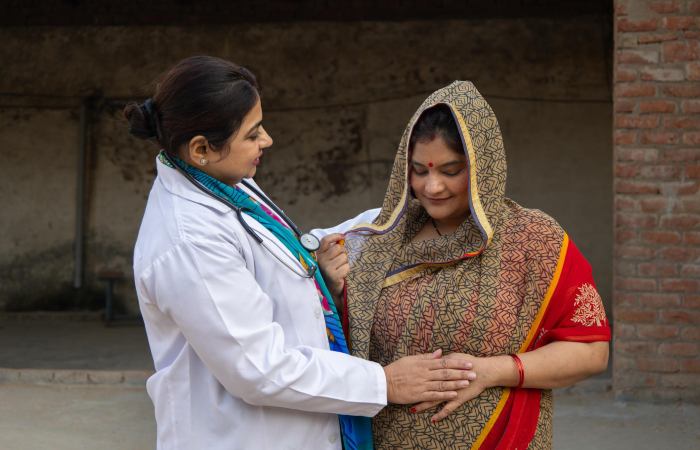
The expectant mother visits the nearest Health Sub-Centre or Primary Health Centre to meet with the Village Health Nurse (VHN) or Urban Health Nurse (UHN). The nurse verifies the pregnancy, collects essential information including contact details and medical history, enters the details into the PICME system, and a confirmation SMS with the RCH ID is sent to the registered mobile number.
This route is ideal for women without reliable internet access or those who are not comfortable with online forms. Your VHN may also visit your home for registration during her scheduled community rounds.
Method 3: Via Common Service Centre, e-Seva, or Government Hospital
Pregnant women can also register through their nearest e-Seva centre, where staff will help with registration at no cost, or by calling the toll-free PICME helpline at 102, or by visiting the nearest government hospital.
All CSC (Common Service Centre) operators are trained to enter PICME data, making this an accessible option in rural areas where internet connectivity may be limited.
How to Login to PICME After Registration
Once your RCH ID has been generated, you can log into the portal at any time to view your pregnancy records, appointment schedule, download documents, and check benefit status.
Steps to Login:
- Visit picme.tn.gov.in and click “Login.”
- Enter your 12-digit RCH ID (your User ID) and your password (the OTP received during registration, or a password you set up).
- Complete the CAPTCHA code shown on screen.
- Click “Submit” to access your account dashboard.
From your dashboard, you can view your antenatal checkup history, scheduled appointments, nutrition kit status, and benefit payment details.
What Is the RCH ID and Why Is It So Important?
Persons registered under PICME are provided with a 12-digit RCH ID, which is used to track all aspects of the pregnancy by the Public Health Department.
Your RCH ID is not just a registration number — it is the key that unlocks every government service connected to your pregnancy. Without it:
- You cannot claim the ₹18,000 maternity benefit
- Your baby’s birth certificate process will be significantly delayed
- Your antenatal checkup records will not be systematically maintained
- Your VHN cannot officially follow up on your pregnancy status
Keep your RCH ID number safe. Write it down, save it on your phone, and carry a printed copy to every hospital visit.
The ₹18,000 Maternity Benefit: Dr. Muthulakshmi Reddy Scheme Explained

This is the financial benefit most women search for when they hear about PICME, and understanding it correctly prevents disappointment and delays.
Under the Dr. Muthulakshmi Reddy Maternity Benefit Scheme, pregnant women receive total assistance of ₹18,000 — comprising ₹14,000 in cash assistance and two nutrition kits worth ₹2,000 each. The Tamil Nadu government contributes ₹9,000 and the Central Government contributes ₹5,000 under the Pradhan Mantri Matru Vandana Yojana (PMMVY).
How the Installments Are Paid
The cash assistance is typically disbursed in three major stages: a first installment of ₹6,000 during the 4th month of pregnancy (provided the mother has completed her Antenatal Care checkups), a second installment of ₹6,000 disbursed four months after delivery following the child’s initial immunisation cycles, and a third installment of ₹2,000 when the child completes nine months and receives the necessary vaccinations such as Measles-Rubella.
Additionally, two nutrition kits are provided, each worth approximately ₹2,000, containing items such as health mix powder formulated for pregnant and lactating mothers, iron tonic, dates, ghee, and Albendazole tablets for deworming.
Eligibility for the Financial Benefit
Not every registered mother automatically receives the ₹18,000. Eligibility for the Dr. Muthulakshmi Reddy Scheme is based on:
- Being a resident of Tamil Nadu aged 19 years or older
- Coming from a Below Poverty Line (BPL) family, or holding an e-Shram card, MGNREGA job card, or belonging to SC/ST category
- Financial assistance is provided for the first two deliveries only
- Post-delivery installments require the birth to have occurred at a government hospital or approved private facility (institutional delivery)
A budget of ₹1,092 crore has been allocated for this scheme for the year 2025–2026, targeting approximately 8 lakh pregnant women annually.
Important: Apply for this scheme as early in your pregnancy as possible. Registering late in pregnancy means missing the early installments and nutrition kits, as they are stage-specific and cannot be claimed retroactively.
How to Download Your Thayi Card (Mother Card)
The Thayi Card is your official pregnancy health record card in Tamil Nadu. It contains your personal details, RCH ID, antenatal checkup history, and immunisation records.
After you register and your details are verified by the Village Health Nurse, you will receive your RCH ID, which is automatically linked to your Thayi Card. You can download it from the PICME portal after verification.
To download: Log in to your PICME account → Go to Reports → Select RCH ID Slip → Click Download PDF. Keep a printed copy — it is required at government hospitals, for benefit claims, and for your baby’s birth certificate.
How PICME Simplifies the Birth Certificate Process
Obtaining a birth certificate for any child born from a mother with PICME registration is simple. After birth, the mother can provide the RCH ID to the hospital to obtain a birth certificate for the newborn quickly.
The PICME system is directly integrated with Tamil Nadu’s Civil Registration System (CRS). This means the birth is automatically linked to the mother’s existing government health record, eliminating the need for separate documentation and reducing delays that non-registered families often face.
What Happens After You Register: Your PICME Journey
Registration is the starting point, not the end. Here is what your PICME journey looks like from registration to birth certificate:
| Stage | Action | What PICME Enables |
|---|---|---|
| First trimester (0–12 weeks) | Register early, get RCH ID | VHN assigned, first nutrition kit, early ANC scheduled |
| Second trimester (13–26 weeks) | Complete ANC visits, submit scheme documents | First financial installment (₹6,000), second nutrition kit |
| Third trimester (27–40 weeks) | Attend scheduled checkups, plan delivery | Institutional delivery support, high-risk monitoring |
| After delivery | Provide RCH ID at hospital | Birth certificate issued, second installment initiated |
| At 4 months post-delivery | Child’s immunisation completed | Second installment (₹6,000) processed |
| At 9 months post-delivery | Measles-Rubella vaccination completed | Third installment (₹2,000) processed |
Common Mistakes That Delay Benefits — And How to Avoid Them
1. Registering too late in pregnancy. The most common mistake. Each financial installment is tied to a specific pregnancy stage. If you register in your 7th month, you have already missed two installments and both nutrition kits. Register before your 12th week.
2. Not linking your Aadhaar to your bank account. Benefits are transferred directly to your bank account via DBT (Direct Benefit Transfer). If your Aadhaar is not linked to your bank account, payments fail without notice. Visit your bank to link them before applying.
3. Skipping antenatal checkups. PICME does not just track registration — it tracks your ANC visits. Missing checkups can delay or suspend installment payments, as disbursements are conditional on completing scheduled health visits.
4. Using a mobile number that belongs to someone else. Your OTP, RCH ID, and appointment reminders all go to the registered mobile number. Use a number you personally have access to at all times.
5. Not informing your VHN after online pre-registration. Online self-registration generates a pre-registration ID, not your final RCH ID. The process is only complete after your Village Health Nurse verifies your details and enters them into the PICME system. Contact your nearest PHC to complete the verification.
Myths About PICME — Clarified
Myth: PICME is only for government hospital deliveries. Fact: Any pregnant woman in Tamil Nadu can register on PICME regardless of where she plans to deliver. However, post-delivery financial installments under the Dr. Muthulakshmi Reddy Scheme require an institutional (government or approved private) delivery.
Myth: You need to visit an office multiple times to complete registration. Fact: Online self-registration can be completed from home. Offline registration requires one visit to your nearest PHC or VHN. Subsequent interactions happen during your scheduled antenatal visits.
Myth: PICME registration means you must only use government hospitals. Fact: Registration connects you to the monitoring system. You can continue receiving care at private hospitals. However, to claim financial benefits, institutional delivery at a government or approved facility is typically required.
Myth: The ₹18,000 is received all at once. Fact: The amount is disbursed in three installments tied to specific stages of pregnancy and infant care. The money reaches your account only after completing the corresponding health milestones.
Myth: If you miss registering early, there is no point registering later. Fact: There is no time limit to register on the PICME portal. Registering as early as possible in pregnancy ensures maximum benefits, but even a late registration is valuable for tracking, healthcare access, and birth certificate processing. Tnea Online
PICME and Broader Maternal Health: Why Tamil Nadu’s Approach Works
Tamil Nadu’s investment in systematic pregnancy monitoring through PICME reflects a commitment backed by global health evidence. Antenatal care provides an opportunity for screening, diagnosis, health promotion, and disease prevention among pregnant mothers and their children. The World Health Organization recommends that pregnant women attend at least four antenatal visits, with early registration being a core component of quality maternal care.
The WHO’s global recommendations on antenatal care are clear: systematic tracking, regular check-ins, and early identification of risk factors prevent the vast majority of pregnancy complications that lead to maternal and infant deaths. PICME is Tamil Nadu’s digital implementation of exactly that framework — and the state’s MMR numbers demonstrate that it works.
Myths About PICME Clarified
Myth: PICME is only for those delivering in government hospitals. Fact: PICME can be registered by any pregnant women in Tamilnadu irrespective of the place of delivery. But, payments now are only given on an institutional delivery (government or private approved).
Myth: You will have to make several trips to an office in order to register. Fact: self-registration online can be done from home. The offline registration is done with a visit to the nearest PHC or VHN to complete the registration. Rest of the interactions are done in the antenatal visits you go for.
Myth: ‘If you register with PICME you have to go only to Government hospitals’ Fact: You are registered with a monitoring system. You can go on availing your services at private hospitals. For financial benefits, institutional delivery is to be done in a Government/approved hospital.
Myth: The 18,000 is given as a lump sum. Fact: The 18,000 is given in three installments, associated with critical levels of pregnancy and child development. The installment is sent to your account once the corresponding health milestones are achieved.
Myth – there is no point registering if you miss the early registration deadline. Fact – there is no deadline for registration on the PICME portal. Registered as early as possible in pregnancy it benefits you to the fullest but a late registration will also be helpful in monitoring, gaining health benefits and birth certificate documentation. Tnea Online
The WHO‘s global guideline for antenatal care is unmistakable: (systematic) monitoring, (maternal and fetal) consultation, and (proto)risk detection and management can prevent nearly all maternal and infant death that are preventable. PICME is the digital adaptation of this very strategy in Tamil Nadu and the MMR statistics speak volumes.
FAQs
What does it do?
Picme.tn.gov.in is the Tamil Nadu state government portal for registering pregnancies, issuing RCH IDs, monitoring maternal and child health, and linking pregnant women to financial and healthcare support through state and central government maternity programs.
What is an RCH ID in PICME?
The 12-digit RCH ID is a unique identifier given to all women who are registered in the PICME system. This number is essential to claim government maternity benefits, track antenatal care in central database and to retrieve your babies birth certificate once born.
How do I register online at picme.tn.gov.in?
Register online on the website – picme.tn.gov.in -click “Generate RCH ID by Yourself” and give your Aadhaar number select OK-authenticate using OTP andenter thepregnancy details. You can also register offline, in your nearbyPHC, with Village Health Nurse or Dial 102 toll free number.
Is there any financial support provided through PICME?
Pregnant women who are not covered under any other scheme are entitled to 18,000 from the Dr. Muthulakshmi Reddy Maternity Benefit Scheme a lump sum of 14,000 in 3 installments (at 4 months of pregnancy, 4 months after delivery and after 9 months of delivery), and two nutrition kits (2,000 each).
How do I obtain for Thayi Card?
Thayi Card (Maternal Card) is your official document for maternal health in Tamil Nadu. This card is connected to your RCH ID once you are registered in PICME and verified through VHN. This can be downloaded in PDF format through your PICME login account available under Reports tab.
Lah. Am I still able to register on PICME if I deliver at a private hospital?
Yes. Pregnant women who live in Tamil Nadu are permitted to register on PICME, irrespective of where they deliver. Women can usually receive all installments of postnatal payment under the Dr. Muthulakshmi Reddy Scheme by delivering at a government hospital or approved private hospital.
How do I retrieve my PICME login password?
By using the PICME website, you can recover your login account by clicking on the password recovery feature. Or go to the nearer Primary health centre or just call the helpline 102.
Does it cost to register in PICME?
Registeration is absolutely free in PICME. And all the government related health services (antenatal check ups, immunization, and institutional delivery service) are free of cost in government hospital.
Final Conclusion
PICME (picme.tn.gov.in), which is not just a bureaucratic box to check, is Tamil Nadu‘s government sponsored health safety net that all pregnant women in Tamil Nadu should be able to utilize in a timely manner.
That‘s what PICME is for! As soon as your pregnancy is confirmed, you are connected with a Village Health Nurse to record your health, free check ups and vaccinations, Nutri Kits, up to RM18,000 cash benefit, and a smooth route to your child‘s birth certificate, all with a single system. No costs.
The only thing that you can do right now that is absolutely the most important thing register. Do it now, before the 12 th week; registering can be done online at picme.tn.gov.in, however, it can also be done through your Village Health Nurse, or by calling 102. Each week delay is a week that your pregnancy is not monitored, an additional week that your baby is not supported and a week worth of money you could be getting as benefit but isn‘t.
Tamil Nadu is now the national example of Mother‘s Caring for Her Own because of programs such as PICME. Use it for your health, for your baby’s and child’s future, for a safer, more well-cared-for pregnancy and delivery.