
Summary 432 Hz is a musical tuning standard where the note A4 vibrates at 432 cycles per second — 8 Hz lower than today’s global standard of 440 Hz. Peer-reviewed studies show it may reduce heart rate, lower cortisol, ease anxiety, and support relaxation. However, many viral claims — like it being “the frequency of the universe” or proven to heal DNA — are not backed by science. This guide gives you the full picture: what’s real, what’s exaggerated, who benefits, and how to practically use 432 Hz music in your daily life.
There’s a good chance you stumbled upon 432 Hz sound frequency while searching for better sleep music, a meditation playlist, or a YouTube rabbit hole at midnight. And the claims you found probably ranged from “deeply relaxing” all the way to “heals your DNA” and “aligns you with the universe.”
The truth sits somewhere in the middle — and it’s genuinely interesting.
This guide breaks down everything you need to know about 432 Hz: what it actually is, what the science says, where the wellness benefits are real, what’s overhyped, and how to use it practically for your health and wellbeing — especially if you’re in India, where sound, vibration, and frequency have been woven into healing traditions for thousands of years.
Table of Contents
What Is 432 Hz Sound Frequency? (Clear Definition)
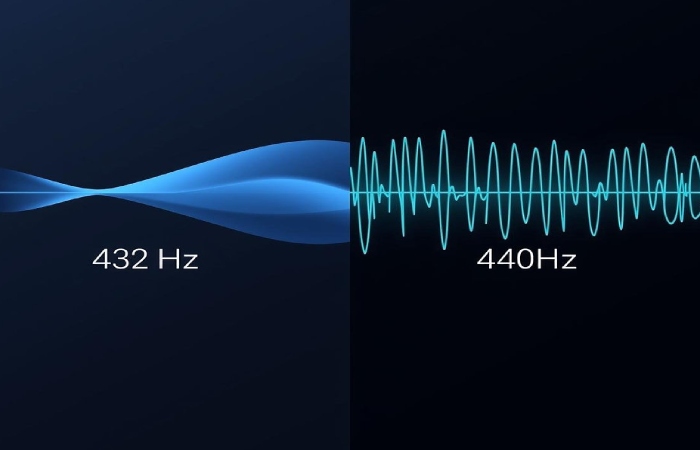
432 Hz refers to a tuning standard where the A above middle C (A4) is set to 432 cycles per second, rather than the modern standard of 440 Hz. This shifts the tuning of every note slightly lower, creating a softer, more resonant feel in the music.
In simpler terms: every musical note has a frequency. The note “A” is used as a universal reference point for tuning instruments. Today, orchestras, studios, and music apps tune to A=440 Hz. The 432 Hz movement proposes tuning that same A note to 432 Hz instead — a difference of just 8 Hz, barely perceptible to the untrained ear, but measurably different in how it affects the body.
That 8 Hz difference is at the heart of a growing global conversation in music, sound healing, wellness, and neuroscience.
A Brief History of 432 Hz
Where Did This Frequency Come From?
The 440 Hz frequency was established as a global standard relatively recently — 440 Hz was recognized as a standard at an international conference in London in 1939, and in 1955, the International Organization for Standardization (ISO) made it official for tuning musical instruments.
Before that standardisation, tuning varied widely across countries, eras, and composers.
Giuseppe Verdi is often mentioned in discussions about 432 Hz, with claims that he preferred this tuning for his compositions. In reality, Verdi’s interest in lowering the pitch standard was primarily driven by practical concerns related to vocal performance rather than any mystical or esoteric reasoning — Verdi opposed the continuous rise in orchestral pitch, a trend that was becoming widespread in his time, putting immense strain on opera singers.
The India and Tibet Connection

In India and Tibet, people traditionally tuned instruments to natural frequencies like 432 Hz to promote meditation, healing, and spiritual balance. Immersive Sound Experience Whether precisely at 432 Hz or simply within a lower, more resonant range, this alignment between sound and the body is deeply embedded in classical Indian music traditions — from the veena to the sitar, and in chanting practices like Vedic mantra.
This is why 432 Hz resonates culturally with many Indian listeners. It echoes something ancient, even if the modern frequency label is relatively new.
The Science Behind 432 Hz: What Research Actually Shows
This is where things get interesting — and honest.
There is a small but growing body of peer-reviewed research on 432 Hz. The findings are modest, preliminary, and promising. They are not miraculous.
Heart Rate and Blood Pressure
A double-blind crossover study published in a peer-reviewed journal found that data suggests 432 Hz tuned music can decrease heart rate more than 440 Hz tuned music — with the study results suggesting the experiment be repeated with a larger sample pool and introducing randomized controlled trials.
This is important context: the effect is real, but the sample sizes have been small. Science requires replication before claiming certainty.
Cortisol and Anxiety Reduction
A randomized clinical trial found that the use of music significantly decreased clinical anxiety levels, and the frequency of 432 Hz was specifically effective in decreasing salivary cortisol levels before tooth extraction.
Salivary cortisol is a biological marker of stress — not a subjective feeling. This makes the finding more clinically meaningful than simple self-reported relaxation.
Broader Physiological Evidence
A 2023 empirical study found significantly lower systolic blood pressure after participants listened to jazz and classical music tuned to 432 Hz. The 440 Hz group did not show the same physiological benefit. These findings were reinforced by a sentiment analysis of over 10,000 YouTube comments, where 71.5% of listeners expressed positive emotional responses to 432 Hz music.
A 2025 review of sound interventions found that listening to 432 Hz music showed the greatest reduction in anxiety and additionally reduced respiratory rate and systolic blood pressure compared to other sound conditions.
For a comprehensive look at the peer-reviewed evidence on 432 Hz vs 440 Hz, the original double-blind crossover study published on PubMed is the most-cited clinical reference and a reliable starting point for your own research.
What Does This All Mean?
The emerging scientific picture suggests that 432 Hz may:
- Activate the parasympathetic nervous system (your body’s “rest and digest” mode)
- Reduce measurable stress hormones like cortisol
- Lower heart rate and blood pressure in controlled settings
- Be subjectively experienced as calmer and more emotionally resonant
None of this makes 432 Hz a cure or a medical treatment. It makes it a potentially useful wellness tool — particularly for stress management, meditation, and sleep support.
Benefits of 432 Hz Sound Frequency
1. Stress and Anxiety Relief
This is where the evidence is strongest. Studies confirm that 432 Hz lowers stress markers, possibly by reducing cortisol and activating the parasympathetic nervous system — the body’s “rest and digest” mode.
For anyone in a high-stress urban environment — students preparing for exams, professionals dealing with work pressure, or anyone navigating modern life in Indian cities — this makes 432 Hz music a practical, zero-cost tool worth trying.
2. Better Sleep Quality
432 Hz music has been linked with deeper, more restorative sleep, especially in clinical settings.
Playing 432 Hz ambient music or binaural tracks as part of a nighttime wind-down routine may help signal to the nervous system that it’s time to rest — particularly useful for those who struggle with racing thoughts at bedtime.
3. Meditation and Mindfulness Support
The 432 Hz frequency resonates with the Schumann Resonance of 8 Hz and is known for its deeply calming and soothing effects, making it the perfect accompaniment for yoga, gentle exercise, meditation, or sleep.
In India’s rich tradition of sound-based meditation — from bhajan to nada yoga — 432 Hz music feels congruent. It doesn’t disrupt; it deepens.
4. Emotional Regulation
Sound baths tuned to 432 Hz are often experienced as gentler, more emotionally calming, and less cerebral than their 440 Hz counterparts.
Whether this is physiological, aesthetic, or psychological doesn’t diminish the benefit. If a sound environment helps you feel safer, more open, and less reactive, that has real value for mental health.
5. Clinical Settings — Dental and Pre-Operative Anxiety
One of the more unexpected research applications: music at 432 Hz significantly reduced anxiety and cortisol levels in patients undergoing dental procedures compared to music tuned at 440 Hz.
This has practical implications for hospitals, dental clinics, and any medical setting where patient anxiety is a concern. Sound as a non-pharmaceutical intervention is cost-effective and risk-free.
Myths vs Facts: The Honest Breakdown
The internet is full of 432 Hz claims that go far beyond what evidence supports. Here’s a clear table.
| Claim | Verdict | What’s Actually True |
|---|---|---|
| “432 Hz is the frequency of the universe” | ❌ Myth | The universe does not vibrate at a single frequency — there is no known natural constant that singles out 432 Hz as cosmically special Thalira |
| “Ancient civilisations all tuned to 432 Hz” | ❌ Myth | Pitch standards in the ancient world showed wide variation, with no clustering around 432 Hz Thalira |
| “440 Hz was imposed by Nazis to harm people” | ❌ False | This conspiracy theory is false: the 440 Hz decision was made by an international group of engineers and musicians with no involvement from the Nazi regime Flower of Sound |
| “432 Hz reduces heart rate and cortisol” | ✅ Supported | Multiple small peer-reviewed studies confirm measurable physiological effects |
| “432 Hz heals DNA” | ❌ No evidence | This claim circulates widely online but has no clinical substantiation |
| “Most people can easily hear the difference” | ⚠️ Debatable | The 8 Hz difference is subtle; responses are often partly aesthetic and partly contextual |
| “432 Hz music reduces dental anxiety” | ✅ Supported | Randomised clinical trials confirm reduced cortisol and anxiety scores |
| “432 Hz is better for meditation” | ✅ Anecdotally strong | Many practitioners and listeners report subjective improvements |
432 Hz vs 440 Hz: The Core Difference
| Factor | 432 Hz | 440 Hz |
|---|---|---|
| Tuning standard | Historical/alternative | ISO global standard since 1955 |
| Sound character | Warmer, softer, deeper | Brighter, crisper, more energetic |
| Physiological effect | May lower HR & cortisol | Neutral in most studies |
| Best use case | Meditation, sleep, healing | Performance, recording, concerts |
| Availability | Growing — many YouTube/Spotify tracks | All mainstream music |
| Evidence base | Small but peer-reviewed | Well-studied for music therapy broadly |
In short, 440 Hz is practical, but 432 Hz may be therapeutic. Serendipity Sounds They aren’t competing — they serve different purposes.
Who Should Try 432 Hz Sound Frequency?
432 Hz is particularly well-suited for:
- Adults dealing with chronic stress or anxiety — especially those who find conventional meditation difficult
- People with sleep difficulties — as a non-pharmaceutical wind-down aid
- Yoga, pranayama, and meditation practitioners — to deepen their practice
- Students and professionals — for focus music during study or work
- Anyone recovering from illness or surgery — where a calm nervous system supports healing
- Patients with pre-procedural anxiety — dental or medical settings
Who Should Approach It Carefully
- People with diagnosed anxiety disorders or PTSD should use 432 Hz music as a complementary tool — not a replacement for clinical treatment
- Those prone to dissociation should be mindful of very long immersive sound sessions
- Parents using it for children should keep sessions short and supervised
432 Hz poses no known harm. But it’s important not to substitute sound therapy for necessary medical or psychological care.
Common Mistakes People Make With 432 Hz
1. Expecting instant or dramatic results 432 Hz is a subtle tool. Most benefits — better sleep, reduced tension, calmer mood — emerge with consistent, repeated use. Think of it like a wellness habit, not a quick fix.
2. Confusing “432 Hz music” with actual 432 Hz content Many tracks labelled “432 Hz” on YouTube or Spotify are not actually retuned. They’re simply ambient or meditation tracks that use the label for SEO. Use a spectrum analyser app or look for artists who explicitly discuss their tuning process.
3. Treating internet claims as clinical fact DNA repair, curing disease, aligning your chakras — these claims circulate widely. Enjoying 432 Hz music is perfectly reasonable. Building a medical belief system around unproven claims is not.
4. Only using it during dedicated meditation sessions You can background-play 432 Hz music while cooking, reading, working from home, or falling asleep. It doesn’t require a ritual to be effective.
5. Dismissing it entirely because of the myths Just because some 432 Hz claims are overblown doesn’t mean the frequency has no value. The cortisol and heart rate data is real. The relaxation benefit is real. Don’t throw out the genuine alongside the exaggerated.
How to Use 432 Hz Sound Frequency: Practical Guide
Listen During Sleep Preparation
Play 432 Hz ambient music or nature soundscapes for 20–30 minutes before bed. Keep the volume low — below conversational level.
Use It in Your Meditation Practice
Replace your standard meditation music with 432 Hz-tuned singing bowls, drone music, or guided sessions. Many practitioners in India are now offering sound bath sessions tuned to this frequency.
Background Play During Low-Focus Work
Writing, creative work, gentle household tasks — 432 Hz music can create a calmer cognitive environment.
Try a Sound Bath (In Person or Online)
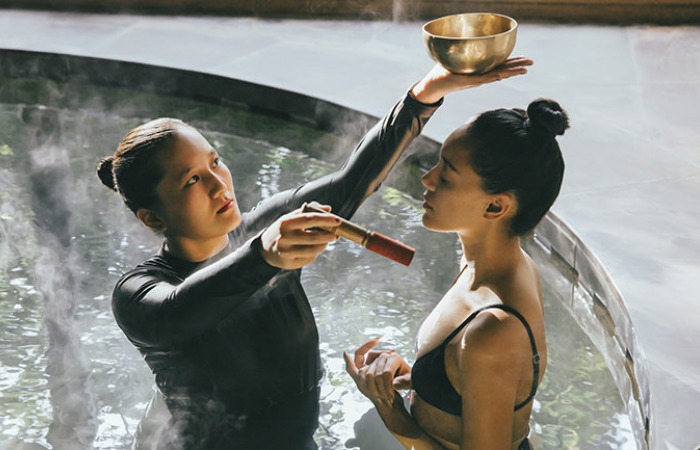 A sound bath using bowls tuned to 432 Hz can feel like a massage for your nervous system — you can attend in person or access online sessions. Konacloudforest Several wellness centres in Indian cities like Hyderabad, Bengaluru, and Mumbai now offer these.
Humming and Vocal Toning
Humming or chanting in resonance with a singing bowl amplifies healing effects — your own voice is a powerful tool for vibrational healing.
Where to Find Genuine 432 Hz Music
- YouTube: Search “432 Hz meditation music” and look for creators who explain their tuning methodology
- Spotify: Several independent artists specifically release 432 Hz-tuned albums
- Dedicated sound healing apps that allow frequency selection
For deeper reading on sound’s effects on the nervous system and stress physiology, the JMIR Mental Health 2025 systematic review on sound interventions and stress is an authoritative, open-access resource that examines 34 clinical studies in this space.
432 Hz and the Indian Wellness Context
India has one of the world’s oldest relationships with therapeutic sound. Nada yoga — the yoga of sound — recognises that vibration is the foundation of all creation. Ragas are designed for specific times of day and emotional states. Temple bells, conch shells, and the sustained drone of the tanpura all work through frequency and resonance.
432 Hz fits naturally into this framework. Whether or not the precise number carries cosmic significance, the principle — that lower, warmer, more resonant sound supports a calmer nervous system — aligns with what Indian traditions have practised for millennia.
The growing Indian wellness market, from sound bath studios in Banjara Hills to frequency meditation apps, is increasingly incorporating 432 Hz as a bridge between ancient practice and modern science. That bridge deserves to be built on honest foundations — which is exactly what this guide is intended to support.
For evidence-based guidance on how music and sound specifically affect the body’s stress response systems, the National Center for Biotechnology Information (NCBI/PubMed) hosts peer-reviewed research on therapeutic music frequencies, including studies on 432 Hz and its physiological effects — a trustworthy reference for clinicians and curious readers alike.
A First-Person Note on Experience
Tens of thousands of listeners, meditators, and wellness practitioners report that 432 Hz music simply feels different — gentler, more settling, easier to surrender to. This subjective experience is not nothing. In wellness, how something makes you feel has its own validity — as long as you hold it alongside an honest understanding of what is and isn’t proven.
Try it for yourself. Listen for 20 minutes before sleep tonight. Notice what happens in your body, not in your beliefs.
Frequently Asked Questions About 432 Hz Sound Frequency
Q: What does 432 Hz sound frequency actually mean? A: It means the musical note A4 is tuned to vibrate 432 times per second, rather than the current standard of 440 Hz. This creates music that is slightly lower in pitch, often described as warmer and more resonant.
Q: Is there any scientific evidence for 432 Hz benefits? A: Yes, though limited. Small peer-reviewed studies have found measurable reductions in heart rate, blood pressure, and cortisol (stress hormone) when participants listen to 432 Hz music compared to 440 Hz. Larger clinical trials are still needed.
Q: Does 432 Hz music actually heal the body? A: It supports relaxation and stress reduction — both of which benefit the body indirectly. Claims about healing DNA, curing disease, or aligning your energy fields are not supported by scientific evidence.
Q: Is 432 Hz frequency safe to listen to? A: Yes. There are no known adverse effects from listening to 432 Hz music. It is non-invasive and can be used alongside any medical treatment.
Q: Can I tell the difference between 432 Hz and 440 Hz music? A: Most people can’t identify it by ear alone. The difference is 8 Hz — subtle. However, many listeners report that 432 Hz music feels calmer over a listening session, even if they can’t identify why.
Q: Is 432 Hz good for sleep? A: Early research and widespread anecdotal evidence suggest it supports sleep preparation by calming the nervous system. Use it as a wind-down tool in the 20–30 minutes before bed.
Q: Is 432 Hz the same as Solfeggio frequencies? A: No. Solfeggio frequencies (396 Hz, 528 Hz, 639 Hz, etc.) are a separate set of tones associated with sound healing. 432 Hz is specifically a musical tuning standard. They can be used together or independently.
Q: How long should I listen to 432 Hz music for benefits? A: Most studies used 15–30 minute listening sessions. As a daily wellness practice, even 20 minutes of background listening can support a calmer nervous system over time.
Q: Was 432 Hz really used in ancient India? A: Indian classical music traditions used natural, resonant tuning systems that often aligned with lower frequencies. The precise 432 Hz label is modern, but the philosophy — that certain vibrational qualities support healing — is deeply rooted in ancient Indian sound practice.
Q: Does 432 Hz resonate with the Schumann Resonance? A: This is a popular claim but mathematically imprecise. The Schumann Resonance fluctuates around 7.83 Hz — not exactly 8 Hz. While 432 is divisible by 8, the actual Schumann fundamental doesn’t cleanly map to 432 Hz without rounding. The claim is spiritually appealing but scientifically overstated.
Final Conclusion
The 432 Hz sound frequency sits at a fascinating intersection — between ancient wisdom and emerging science, between genuine physiological benefit and internet mythology. The honest answer is: it works, modestly and measurably, as a tool for stress reduction, cortisol management, and relaxation support. It does not cure disease, heal DNA, or possess cosmic powers.
But in a world where stress is constant, sleep is elusive, and the nervous system rarely gets a chance to rest — a gentler tuning, a warmer sound, and 20 quiet minutes of intentional listening might be exactly enough.
Use 432 Hz with open curiosity, realistic expectations, and a willingness to notice how your own body responds. That, ultimately, is how all good wellness begins — not with belief, but with honest attention.